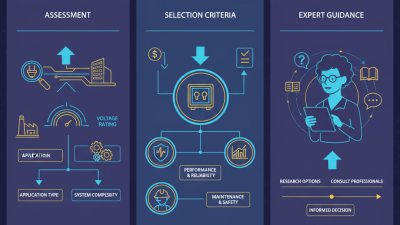
Choosing the right Type Of Transformer in 2026 requires more than comparing voltage ratings and purchase prices. Grid upgrades, renewable generation, electric vehicles, and data centers are reshaping transformer demand. The International Energy Agency’s Electricity 2024 report forecasts strong global electricity growth through 2026, driven largely by industry, cooling, and digital infrastructure. Every new load adds pressure to an already aging grid.
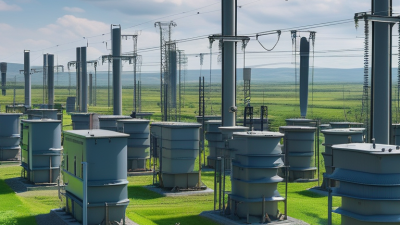
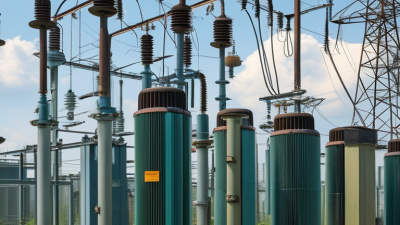
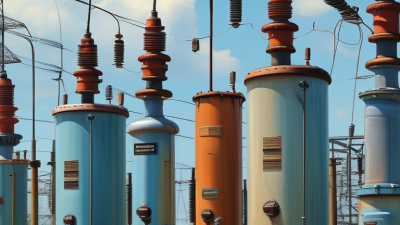
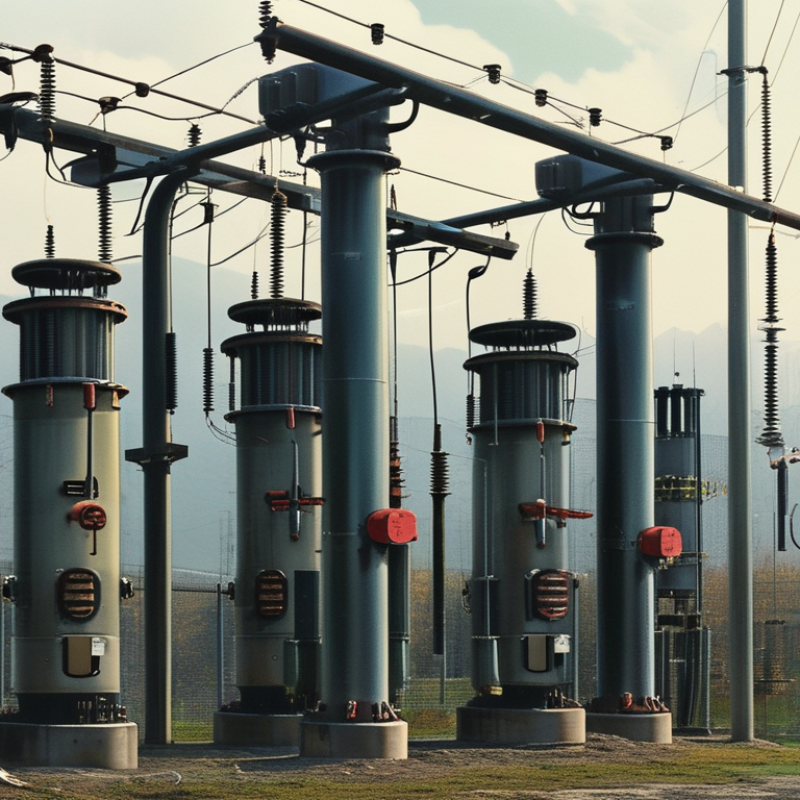
Transformer selection starts with the application. A dry-type transformer may suit an indoor commercial facility because it avoids liquid insulation. An oil-immersed unit may better support outdoor substations and higher capacities. Cast-resin designs can perform well where moisture, fire safety, and limited maintenance matter. Small details matter too, including ambient temperature, harmonics, altitude, fault levels, noise limits, and future loading.
Stephen J. Chapman explains the foundation clearly in Electric Machinery Fundamentals: “A transformer is a device that changes AC electric power at one voltage level to AC electric power at another voltage level.” That definition is simple, but the decision is not. The U.S. Department of Energy’s Transformer Supply Chain Review highlights aging infrastructure, constrained manufacturing capacity, and extended procurement challenges. Availability can now influence engineering choices.
Do not select only by today’s load.
A 1,000 kVA transformer running near its limit may appear efficient, yet leave little room for expansion. Oversizing also has costs, including higher losses, footprint, and idle investment. The most reliable choice connects technical performance, lifecycle economics, safety requirements, and supply realities. Some specifications remain uncertain until site measurements are completed. That is worth admitting. Good engineering leaves room for verification, not assumptions.
A transformer processes information through attention rather than reading one item at a time. It compares tokens across a sequence and identifies useful relationships. Self-attention helps the model connect distant words, images, or sound patterns. Positional signals show where each item appears. Without them, order becomes unclear. Encoder models analyze input. Decoder models generate output. Encoder-decoder models handle both tasks together.
The main applications reflect these differences. Encoder systems suit classification, search ranking, document tagging, and anomaly detection. Decoder systems support drafting, dialogue, code generation, and controlled content creation. Encoder-decoder designs work well for translation, summarization, and structured rewriting. Vision transformers divide images into small patches. Audio systems process short time frames. Some models also study sensor streams, though noisy data can expose serious weaknesses.
Choose by task, not fashion. Check accuracy, response time, context length, energy use, and available hardware. A compact model may serve a mobile device better than a larger one. Test unfamiliar inputs, spelling errors, missing data, and unusual formatting. Keep evaluation records and review them with domain specialists. This improves reliability, but it does not remove uncertainty. No model is perfectly neutral. Training data can contain hidden gaps. I would also question impressive benchmark scores when real operating conditions differ. A model that performs well in a laboratory may respond slowly beside a busy production line. Calibration matters. So does human review.

Start with voltage, power, frequency, and load details. Confirm the primary and secondary voltage from measured site conditions. A small mismatch can create overheating, poor regulation, or unsafe insulation stress. For single-phase systems, estimate apparent power with kVA = volts × amps ÷ 1,000. Three-phase systems require the √3 factor. Add motor-starting current, LED drivers, variable-speed drives, and future capacity. The IEA’s Electricity 2024 report projects global electricity demand to rise by 3.4% annually through 2026. That growth makes spare capacity more practical, not excessive.
Frequency must match the electrical network and the transformer’s rating. A 50 Hz unit should not be treated as automatically suitable for 60 Hz service. Review continuous load, intermittent duty, harmonics, ambient temperature, altitude, and enclosure location. Dry-type transformers often suit indoor installations, while liquid-filled designs can support larger outdoor duties. IEC 60076 and IEEE C57.12.00 provide useful technical reference points. Still, a spreadsheet can miss a severe inrush event. Field measurements matter.
Tips: Record voltage at peak demand. Measure real current, not only nameplate current. Keep 20–30% headroom when expansion is likely. Ask an engineer to verify short-circuit withstand and protection coordination. The U.S. Department of Energy’s transformer research highlights efficiency and grid resilience as major design priorities. Do not choose by kVA alone. Load behavior decides more than the label.
Choosing a transformer in 2026 starts with design, not price. Each type responds differently to heat, moisture, load changes, and installation space. Dry-type transformers use air insulation and suit indoor facilities where fire risk and maintenance access matter. Oil-immersed transformers usually handle higher capacities efficiently, but they require spill control, ventilation, and regular fluid testing. The enclosure and cooling method also influence service life.
Operating conditions can change the correct choice. A toroidal design can reduce noise and magnetic leakage in sensitive equipment, while an autotransformer provides efficient voltage adjustment without full electrical isolation. Choose an isolation transformer when separation from the supply is essential.
Check altitude, ambient temperature, humidity, harmonics, and short-circuit levels before approval. Small details matter.
A practical assessment should review the load profile, not only the nameplate rating. Motors may create starting currents, while power electronics can produce heat through harmonics. Engineers should compare efficiency at expected loads, insulation class, cooling capacity, and access for inspection. A unit rated for extreme conditions may cost more than necessary. That can be wasteful. Yet selecting too closely can cause overheating later. A common mistake is trusting average load data when peak demand is the real problem. Field measurements and verified calculations remain more reliable than assumptions.
How to Choose the Right Type of Transformer in 2026?
A practical choice begins with the load, not the nameplate alone. Measure the real load. Record peak demand, daily variation, harmonics, motor starting currents, and expected expansion. A highly efficient transformer can still waste energy when oversized. Compare no-load and load losses across the full operating profile, not only at rated capacity. In many facilities, a slightly smaller unit performs better, but future growth can change that decision.
Safety depends on location and failure consequences. Dry-type transformers suit many indoor areas because they avoid liquid leakage and reduce fire exposure. Oil-immersed units may provide strong thermal performance for larger outdoor installations, but they require containment, clearances, monitoring, and carefully planned fire protection. Check insulation levels, short-circuit strength, grounding, protective coordination, and applicable electrical codes. Small oversights matter. A perfect spreadsheet cannot replace a site walk.
Cooling and installation constraints often decide the final selection. Dry-type units may use natural air cooling or fan-assisted cooling, while oil-filled units can use natural or forced circulation. Keep air paths clear, especially in dusty rooms. Heat leaves clues. Inspect temperature rise, ventilation openings, ambient conditions, altitude, and noise limits. Measure door widths, lifting points, floor loading, cable-bending space, and maintenance access before ordering. I have seen equipment fit electrically but fail physically at the doorway. That detail deserves more attention than it usually receives.
| Transformer Type | Typical Rating Range | Typical Full-Load Efficiency | Cooling Method | Safety and Fire Considerations | Installation Requirements | Maintenance Profile | Best-Fit Applications |
|---|---|---|---|---|---|---|---|
| Oil-Immersed Distribution Transformer | Approximately 50 kVA to 5 MVA for common distribution installations | Approximately 98.5%–99.7%, depending on rating, voltage, loading, and losses | Liquid-immersed, naturally or forced air-cooled; commonly designated ONAN or ONAF | Combustible insulating liquid requires fire separation, spill containment, and suitable ventilation where required | Usually installed outdoors or in a dedicated transformer room; requires clearance, grounding, and access for lifting equipment | Periodic inspection of liquid level, temperature, leaks, bushings, pressure devices, and grounding; liquid testing may be required | Utility distribution, industrial substations, outdoor sites, and installations where high efficiency and overload capability are priorities |
| Standard Dry-Type Transformer | Approximately 15 kVA to 5 MVA for low- and medium-voltage systems | Approximately 97.5%–99.2%, depending on size and load | Air-cooled, naturally ventilated or fan-assisted; commonly designated AN or AF | No liquid leakage risk; insulation system still requires appropriate temperature limits, enclosure protection, and fire-code compliance | Suitable for indoor electrical rooms; requires adequate ventilation, clearance, noise control, and protection from dust and moisture | Generally limited to visual inspection, cleaning, torque checks, temperature monitoring, and verification of ventilation | Commercial buildings, hospitals, schools, data facilities, and indoor industrial distribution systems |
| Cast-Resin Dry-Type Transformer | Approximately 100 kVA to 5 MVA in common medium-voltage applications | Approximately 98.0%–99.3%, depending on rating and design | Air-cooled, naturally ventilated or fan-assisted; commonly designated AN or AF | Solid resin insulation provides strong moisture resistance and eliminates liquid spill risk; fire performance depends on the certified insulation system | Can be installed indoors or in protected outdoor enclosures; requires airflow, clearance, lifting access, and protection from contamination | Low routine maintenance; inspect for dust, tracking, cracks, loose connections, abnormal noise, and overheating | High-rise buildings, underground substations, coastal or humid environments, public facilities, and areas with strict fire-safety requirements |
| Amorphous-Core Distribution Transformer | Commonly approximately 25 kVA to 2.5 MVA, subject to design availability | Typically similar full-load efficiency to other high-efficiency units, with substantially reduced no-load loss | Available in liquid-immersed or dry-type configurations; cooling depends on the selected construction | Safety characteristics follow the chosen liquid or dry-type insulation system; lower operating temperature may support longer insulation life | Installation requirements are similar to the corresponding conventional transformer; verify dimensions, weight, and impedance before ordering | Maintenance depends on construction; liquid versions require liquid-related checks, while dry versions require cleaning and thermal inspection | Buildings and utility networks with lightly loaded or continuously energized transformers where lifetime energy savings are important |
| Medium- and High-Voltage Power Transformer | Typically above 5 MVA, with ratings extending to hundreds of MVA | Generally about 99.0%–99.8%, depending on capacity, voltage class, and loading | Usually liquid-immersed with radiators; natural or forced oil and air circulation may be used | Requires engineered fire protection, oil containment, pressure relief, surge protection, and comprehensive grounding | Requires a designed substation foundation, transport route, large installation clearances, cable or bus connections, and commissioning tests | Planned maintenance commonly includes oil testing, dissolved-gas analysis, electrical testing, bushing inspection, and cooling-system checks | Transmission substations, large renewable-energy plants, heavy industry, and utility interconnection points |
| Pad-Mounted Distribution Transformer | Approximately 25 kVA to 2.5 MVA for common network applications | Approximately 98.5%–99.6%, depending on rating and loading | Normally liquid-immersed and naturally cooled; enclosed radiators dissipate heat to ambient air | Tamper-resistant enclosure improves public safety; liquid containment, pressure relief, grounding, and clearance remain necessary | Requires a level reinforced pad, underground cable access, vehicle-impact protection where needed, and safe operating clearances | Routine visual checks, leak inspection, enclosure inspection, temperature monitoring, and periodic electrical testing | Residential developments, commercial sites, campuses, renewable-energy collection systems, and underground distribution networks |
| High-Frequency or Solid-State Transformer | Commonly used from a few kVA to several hundred kVA; larger systems are emerging for specialized applications | Often approximately 95%–99%, depending on power-conversion stages, switching frequency, and operating point | Forced-air or liquid cooling may be required for power electronics and semiconductor devices | No large insulating-liquid volume in many designs, but electrical isolation, electromagnetic compatibility, arc-flash protection, and control-system safety are critical | Requires compatible controls, protection coordination, harmonic assessment, communication interfaces, and reliable auxiliary power | Requires firmware and control checks, thermal management, capacitor inspection, semiconductor diagnostics, and power-quality monitoring | Electric-vehicle infrastructure, microgrids, renewable-energy systems, traction systems, and applications requiring bidirectional power flow |
Selecting the best transformer for your 2026 project starts with the load, not the product catalogue.
Record the required power, voltage ratio, frequency, phase, and expected operating hours. Include motors, heaters, lighting, and future expansion. A transformer sized only for today may run hot tomorrow.
Check the installation environment carefully. Dust, moisture, altitude, and limited ventilation can change the cooling requirement. Dry-type units suit many indoor applications, while liquid-filled designs may support higher capacities when proper containment is available. Review efficiency, voltage regulation, insulation class, noise levels, and harmonic performance.
Small details matter. A quiet room can make transformer hum surprisingly noticeable.
Digital monitoring is becoming more useful in 2026. Temperature sensors, load tracking, and fault alerts can support safer maintenance decisions. However, extra data does not replace sound engineering. I once trusted a neat load spreadsheet and underestimated a motor’s starting current. The calculation looked correct. The result was not.
Have a qualified engineer verify short-circuit ratings, protection settings, clearances, and local compliance requirements. Request test records and inspect installation workmanship. Also question optimistic efficiency claims under partial load. Your project may spend most of its life below peak capacity. Choose a transformer that performs reliably during normal conditions, not only during a perfect laboratory test.