Transformers are crucial in electrical engineering. They play a vital role in power distribution and transmission. Understanding the types of transformers is essential for engineers and technicians.
There are several types of transformers, each serving unique purposes. Some are used for stepping up voltage, while others step down voltage. This distinction affects how they are applied in electrical systems. Knowing these differences enhances system efficiency and safety.
However, many professionals overlook some transformer types. This can lead to inefficiencies or costly mistakes. Engineers must explore and reflect on their applications and limitations. Grasping the types of transformers can dramatically improve project outcomes.
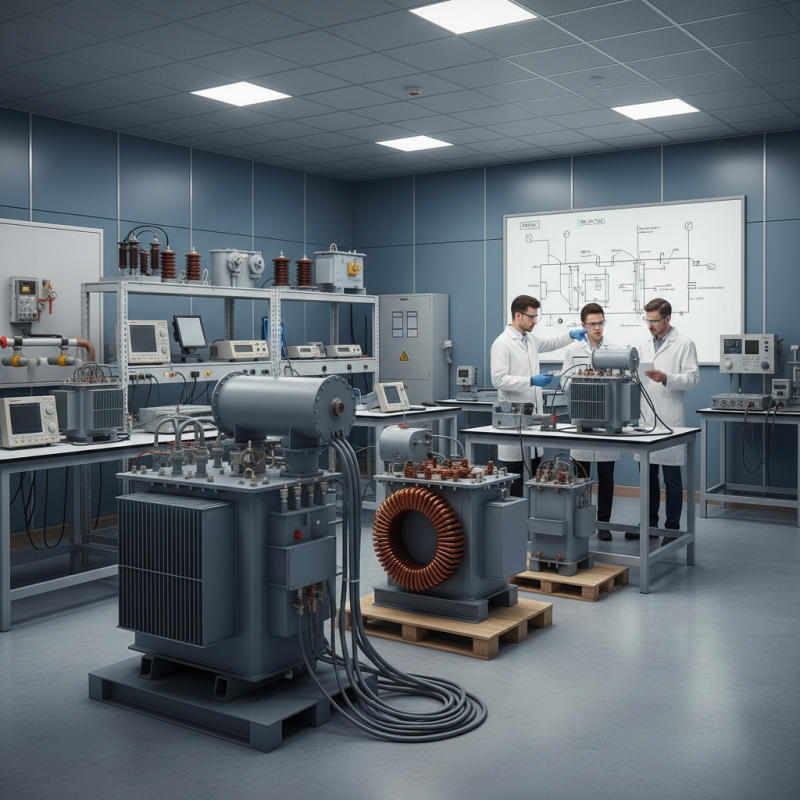
Transformers are vital components in electrical engineering. They transfer electrical energy between circuits through electromagnetic induction. Understanding the types of transformers can help engineers select the right one for specific applications.
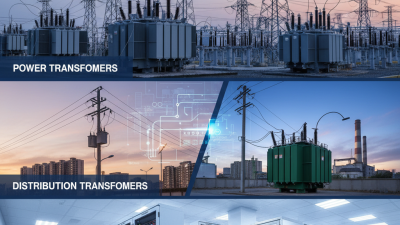
There are several types of transformers. Power transformers manage high voltage for electrical grids. They are crucial in delivering electricity efficiently. Distribution transformers reduce voltage for safe usage in homes and businesses. Then, there are isolation transformers. They protect sensitive devices from voltage spikes. Each transformer type is designed for specific tasks.
One should consider the nuances of transformers. Efficiency varies across designs and usage. For example, while power transformers are efficient, smaller isolation transformers may have energy losses. Engineers must weigh these factors during selection. Overall, the world of transformers is complex yet fascinating. It demands knowledge and careful consideration to master their use.
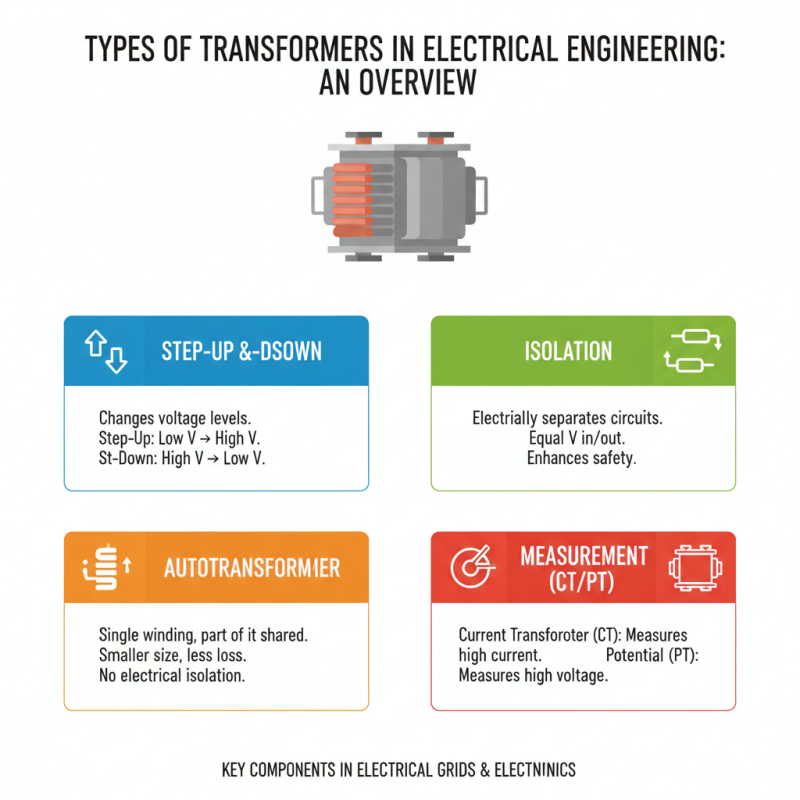
Transformers play a critical role in electrical engineering. They adjust voltage levels, which is essential for efficient energy transfer. Step-up transformers increase voltage, making it suitable for long-distance transmission. Higher voltage reduces energy losses in cables and improves efficiency.
On the other hand, step-down transformers convert high voltage to a safer, usable level for residential or industrial use. This transformation is crucial for providing electricity to homes and businesses. Understanding these functionalities helps engineers design effective power systems.
Both transformer types have limitations. For instance, step-up transformers cannot be used at the end of a distribution line, where low voltage is required. Similarly, step-down transformers can lead to energy losses if not properly rated. Engineers must consider these factors while designing systems. Each scenario demands careful evaluation to ensure reliability and efficiency.
| Transformer Type | Function | Applications | Primary Voltage (V) | Secondary Voltage (V) |
|---|---|---|---|---|
| Step-Up Transformer | Increases voltage from primary to secondary | Power generation, transmission | 10,000 | 50,000 |
| Step-Down Transformer | Decreases voltage from primary to secondary | Distribution of electricity, residential usage | 11,000 | 240 |
| Isolation Transformer | Electrically isolates circuits | Safety applications, audio systems | 120 | 120 |
| Toroidal Transformer | Efficient power conversion, low electromagnetic interference | Compact electronic devices | 230 | 12 |
Isolation transformers are essential in electrical engineering. They separate different sections of a circuit. This separation helps protect both equipment and users from electric shock. These transformers also filter out electrical noise, which can cause issues in sensitive equipment.
In practical terms, isolation transformers are used in medical facilities. They safeguard patients and equipment during procedures. They are also found in audio systems, where they enhance sound quality by eliminating interference. However, not all applications require isolation. Thus, engineers must assess needs carefully. Sometimes, a standard transformer might suffice.
Understanding isolation transformers involves details like voltage rating and power capacity. Engineers should consider these aspects based on specific applications. The installation of these transformers should follow strict guidelines. Regular inspections and maintenance are crucial for safety and reliability. Balancing performance with safety is a complex task that requires ongoing reflection.
Auto transformers play a crucial role in voltage regulation in electrical systems. They are unique because they use a single winding for both primary and secondary circuits. This design allows them to adjust voltage levels efficiently. In many applications, they are favored for their compact size and lower cost compared to traditional transformers. Their effectiveness in stepping up or stepping down voltage is notable.
However, there are limitations to consider. Auto transformers cannot provide electrical isolation between the input and output, which can be a safety concern. In some scenarios, this lack of isolation might lead to potential risks. Additionally, their capacity for handling large voltage differences is not as high as that of conventional transformers. This limitation requires careful planning when selecting an auto transformer for specific applications.
Understanding the specific requirements of a system is essential. Miscalculating the voltage needs can lead to system inefficiencies. Real-world applications often present challenges, such as varying load conditions. Engineers must account for these factors to ensure reliable voltage regulation. It's a balancing act: maximizing efficiency while maintaining safety and functionality.
This chart illustrates the efficiency of various transformer types used in electrical engineering, focusing on their roles in voltage regulation.
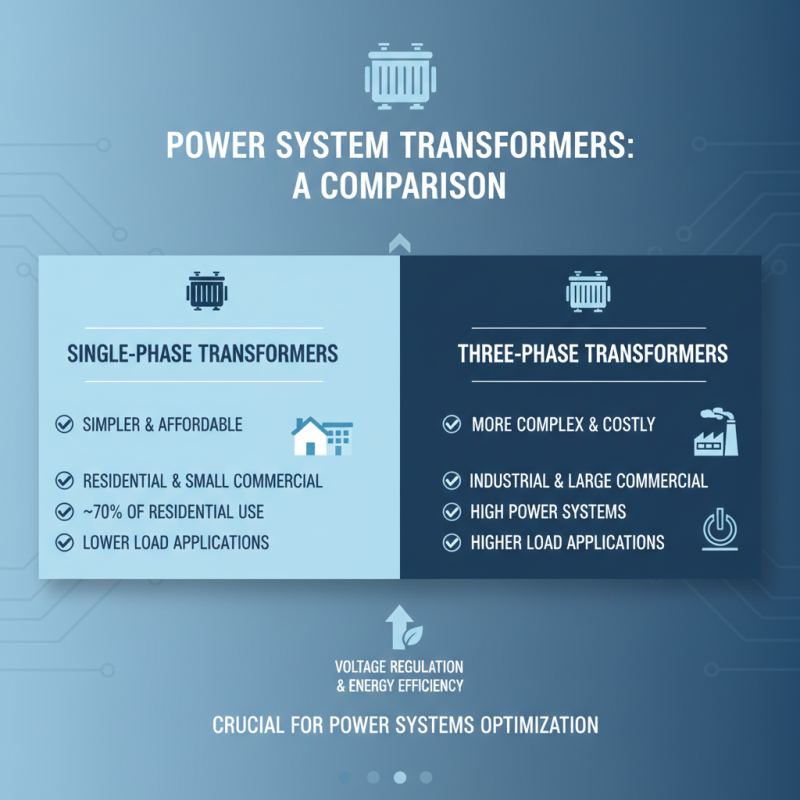
In power systems, transformers play a crucial role in voltage regulation and energy efficiency. Single-phase transformers are simpler and more affordable. They are suitable for residential purposes and smaller commercial applications. Approximately 70% of transformers used in the residential sector are single-phase. They operate effectively under lower loads, but their limitations become apparent in larger power systems.
On the other hand, three-phase transformers are essential for industrial and utility applications. They are more efficient and can handle higher loads. According to recent industry reports, three-phase transformers account for around 80% of power distribution in urban areas. Their design allows for smoother power delivery, reducing losses significantly. This is vital, as power quality directly impacts operational reliability in industries.
However, choosing between these transformers is not always straightforward. Single-phase transformers offer ease of installation but may struggle with high load demands. In contrast, three-phase units, while more efficient, come with higher upfront costs. Evaluating the specific needs of a power system requires careful consideration of these factors. Understanding the trade-offs can lead to better decision-making.