2026 Top Low Voltage Switchgear Trends and Innovations Explained
In the realm of electrical engineering, the evolution of Low Voltage Switchgear has captured significant interest. Industry expert Dr. Emma Chen emphasizes its importance: “Innovation in Low Voltage Switchgear can redefine safety and efficiency standards.” As we approach 2026, the trends and innovations within this sector are crucial for enhancing operational reliability.
Low Voltage Switchgear is no longer a static component. It embraces advanced technologies and smart features. Predictive maintenance and IoT connectivity are game-changers. They address industry demands for efficiency. However, some utilities struggle to keep pace with rapid developments. A noticeable challenge arises in adopting these new technologies effectively.
Moreover, sustainability is becoming a key focus. The integration of eco-friendly materials and energy-efficient designs is on the rise. Yet, some manufacturers still grapple with developing such solutions. The future of Low Voltage Switchgear holds immense potential, albeit with hurdles that need critical reflection. The journey toward innovation is filled with both promise and obstacles. Understanding these dynamics is essential for professionals in the field.

Emerging Technologies in Low Voltage Switchgear for 2026
The evolution of low voltage switchgear is fascinating. By 2026, emerging technologies are set to reshape this field significantly. Smart technology integration stands out. It enhances monitoring and control, allowing real-time data analysis. This development increases efficiency and reliability.
Another vital innovation is the focus on sustainability. Modern switchgear is designed to minimize environmental impact. Advanced materials and energy-efficient designs are becoming standard. These changes reflect a growing commitment to eco-friendly solutions.
However, challenges remain. Not all companies adapt swiftly to these innovations. Training and knowledge gaps can hinder integration. The transition period may reveal flaws in existing systems. Future advancements must address these issues to ensure a seamless evolution in low voltage switchgear technology.
2026 Low Voltage Switchgear Key Features and Trends
Sustainable Practices and Materials in Low Voltage Switchgear
The focus on sustainable practices in low voltage switchgear is growing. Many manufacturers are exploring eco-friendly materials. These innovations aim to reduce environmental impact while maintaining performance.
Recycled plastics are becoming popular. They reduce waste and lower resource consumption. Additionally, biodegradable components are in development. These materials can decompose naturally, minimizing landfill contributions.
However, challenges remain. Not all sustainable materials meet industry standards. Finding a balance between sustainability and reliability is essential. Companies face scrutiny over performance issues with new materials. Transitioning to greener practices requires careful consideration of these potential risks.
Integration of IoT and Smart Technologies in Switchgear Solutions
The integration of IoT and smart technologies in low voltage switchgear represents a remarkable shift in electrical management. These advancements allow for real-time data collection and analysis. Switchgear can now monitor performance metrics and identify potential issues before they escalate. This predictive maintenance reduces downtime and enhances operational efficiency.
Smart switchgear can communicate with other devices in a smart grid. This interoperability is critical for optimizing energy distribution. For example, sensors in the switchgear can relay information about load conditions. This helps operators make informed decisions quickly. However, the reliance on technology raises questions about cybersecurity. As systems become more connected, the risk of unauthorized access increases.
Innovation in this field also pushes traditional designs to evolve. While smarter technologies enhance capabilities, they introduce complexities. Manufacturers must focus on user-friendly interfaces for effective operation. Training personnel to adapt to these new tools can be challenging. Balancing innovation with practical usability is essential as the industry progresses.
Trends in Energy Efficiency and Renewable Energy Integration
The demand for energy efficiency and renewable energy integration continues to shape the landscape of low voltage switchgear. According to a 2023 industry report, energy efficiency technologies are projected to reduce energy consumption by 30% over the next decade. This trend signals a shift as industries increasingly prioritize sustainable practices. Enhanced switchgear systems play a critical role in optimizing energy use within industrial and commercial infrastructures.
New innovations in low voltage switchgear include designs that facilitate renewable energy integration. Data from the International Energy Agency (IEA) indicates that by 2025, renewables will account for over 50% of global electricity generation. This shift necessitates switchgear capable of accommodating variable energy sources, such as solar and wind. Innovative designs, such as smart switchgear, allow for real-time monitoring and management of energy flows, enhancing flexibility and reliability.
However, not all transitions are seamless. Challenges remain in harmonizing traditional systems with new technologies. Maintaining stability while adapting to fluctuating energy inputs requires careful planning. Addressing these issues can improve energy resilience and efficiency. Ultimately, the ongoing evolution of low voltage switchgear systems will be crucial for achieving a sustainable energy future.
2026 Top Low Voltage Switchgear Trends and Innovations
| Trend/Innovation |
Description |
Impact on Energy Efficiency |
Renewable Energy Integration |
| Smart Switchgear |
Integration of IoT for real-time monitoring and management. |
Increases operational efficiency and reduces energy loss. |
Facilitates connection to distributed energy resources. |
| Modular Design |
Flexible configurations for easy upgrades and maintenance. |
Enhances scalability to meet changing energy demands. |
Adapters for various renewable energy inputs. |
| Environmentally Friendly Materials |
Use of sustainable materials in manufacturing switchgear. |
Reduces carbon footprint of energy infrastructure. |
Supports sustainability initiatives in energy production. |
| Advanced Protection Mechanisms |
Incorporation of digital relays and protection systems. |
Improves reliability and reduces downtime. |
Ensures stability when integrating renewables into the grid. |
| Energy Storage Solutions |
Integration with battery storage to manage load. |
Enhances energy management and peak shaving. |
Facilitates the deployment of renewable energy. |
Advancements in Safety Features and Regulatory Compliance in 2026
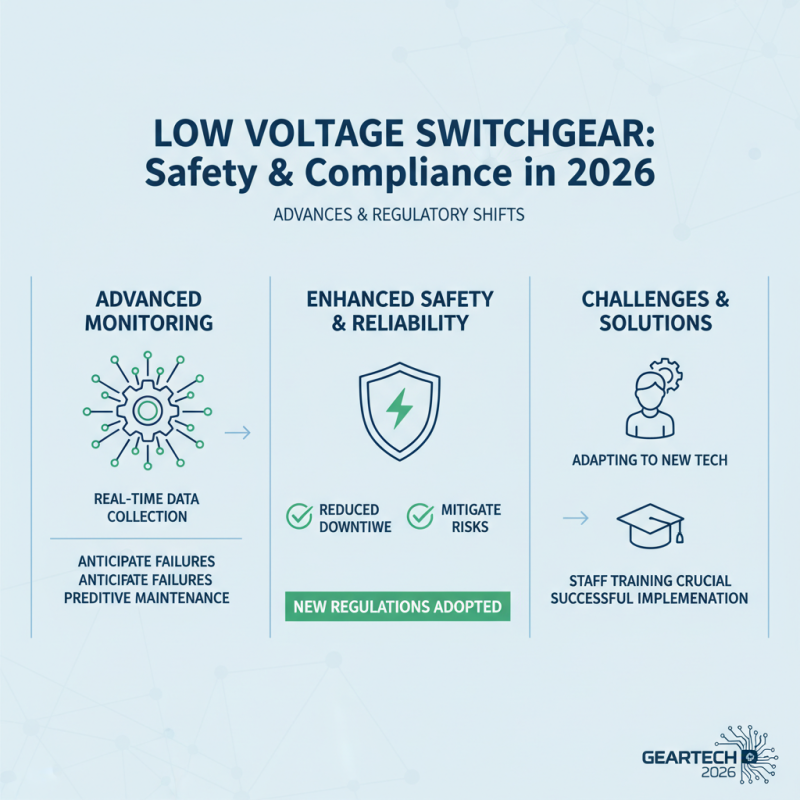
The landscape of low voltage switchgear is evolving rapidly in 2026, particularly in safety features and regulatory compliance. One significant advancement is the integration of advanced monitoring systems. These systems enhance real-time data collection, enabling users to anticipate and mitigate potential failures. By implementing predictive maintenance protocols, organizations can reduce downtime. However, adapting to new technologies often poses challenges. Staff training remains crucial for successful implementation.
Regulatory compliance is becoming more stringent. Industry standards now emphasize the need for enhanced safety measures. Risk assessments must be more thorough. Many companies struggle to keep pace with these changes, leading to compliance gaps. Continuous education and collaboration among stakeholders are vital. Engaging with experts can help businesses navigate the complexities of evolving regulations.
In addition, there is a growing focus on eco-friendly materials in switchgear design. Sustainable practices are critical. Transitioning to greener options can be difficult for some manufacturers. Balancing innovation with environmental responsibilities requires careful planning. The quest for safety and sustainability continues, highlighting an essential area for reflection and growth.