Leave Your Message
-
Whatsapp
-
Wechat

Choosing reliable Top Box Type Substation Manufacturers requires more than comparing prices or catalog photographs. A Box Type Substation combines transformers, medium-voltage switchgear, low-voltage panels, and protective equipment in one compact enclosure. Its performance affects construction schedules, worker safety, and long-term power stability. Global buyers should examine factory experience, engineering capacity, certification records, and after-sales support before signing a contract.
A capable manufacturer can provide clear single-line diagrams, verified component brands, and test documentation. Look for routine tests covering insulation resistance, transformer ratio, protection functions, and enclosure quality. Factory acceptance testing should also confirm wiring accuracy and switchgear operation. Details matter. A poorly sealed door can invite moisture into a coastal installation. A weak ventilation design may raise transformer temperatures in desert conditions. Buyers should match the equipment with local voltage levels, frequency, climate, seismic needs, and grid regulations. International standards help, but they do not remove every project risk.
No supplier is perfect. That matters.
This guide compares manufacturers through practical criteria, including production capacity, customization, delivery control, technical communication, and warranty response. It also considers whether suppliers can support spare parts, remote troubleshooting, and commissioning at distant sites. Customer references deserve careful review, especially for projects with similar ratings and environmental conditions. Some published claims may sound impressive yet remain difficult to verify. Therefore, buyers should request recent test reports, factory photographs, and project contacts. A dependable decision combines documented evidence with engineering judgment, not marketing language alone.
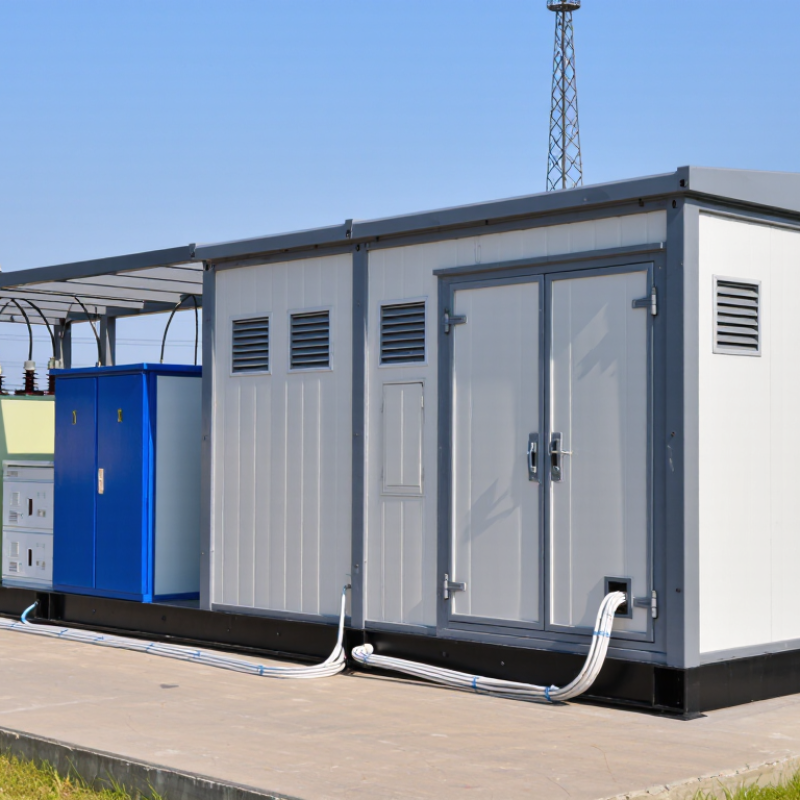
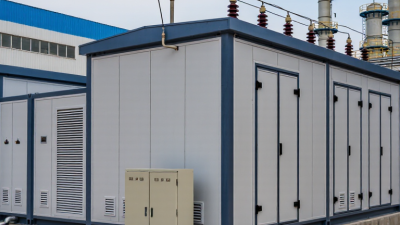
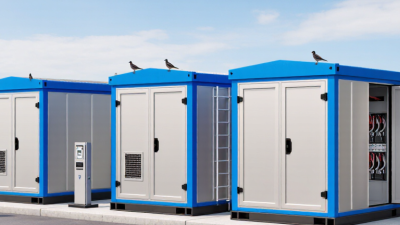
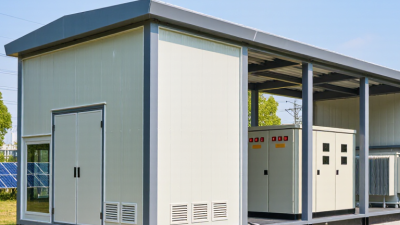
A box type substation is a factory-assembled electrical unit inside a weather-resistant enclosure. It usually combines a medium-voltage switchgear, distribution transformer, low-voltage panel, and protection devices. The enclosure may use steel or concrete, depending on installation conditions. It is compact and practical.
Incoming medium-voltage power enters the switchgear first. Protective relays and fuses control faults before energy reaches the transformer. The transformer then reduces voltage for factories, commercial buildings, renewable energy sites, or public infrastructure. Low-voltage equipment distributes power through outgoing feeders. Cable compartments and interlocking systems help reduce accidental contact during operation.
For global buyers, the internal layout matters as much as the rated capacity. Check transformer losses, insulation level, cooling method, IP protection, and maintenance access. Standards such as IEC 62271-202 and IEC 60076 may support technical evaluation, but local grid rules still apply. A coastal site needs stronger corrosion protection. A dusty site may require better sealing and filtration. That detail matters.
In field projects, installation drawings often reveal problems earlier than product brochures. Confirm cable entry direction, foundation dimensions, earthing points, and spare feeder space. Space is frequently underestimated. A technically correct unit can still become difficult to maintain. This is an area where buyers and manufacturers should review assumptions carefully, especially when climate, voltage, and service practices differ between countries.
| Evaluation Dimension | Typical Data or Requirement | Why It Matters to Global Buyers |
|---|---|---|
| Product Definition | A box type substation is a factory-assembled, enclosed substation that integrates medium-voltage switchgear, a distribution transformer, and low-voltage switchgear in one compact housing. | The integrated design reduces site construction work, installation time, and equipment footprint. |
| Main Operating Function | It receives medium-voltage electricity, switches and protects the incoming circuit, transforms the voltage to a lower level, and distributes power through low-voltage feeders. | This defines the complete electrical path from the utility or upstream network to the connected loads. |
| Common Medium-Voltage Range | Common designs are available for systems up to 12 kV, 24 kV, or 36 kV, depending on the local distribution network and equipment insulation rating. | The rated voltage must match the purchaser’s grid voltage and required insulation level. |
| Common Low-Voltage Output | Typical secondary voltages include 400 V, 415 V, 440 V, and 480 V AC, subject to regional grid practice and project requirements. | Correct secondary voltage is essential for motor performance, lighting systems, and industrial equipment compatibility. |
| Typical Transformer Capacity | Common project ratings range from approximately 50 kVA to 2,500 kVA. Larger capacities may require special enclosure, ventilation, transport, and protection arrangements. | Capacity selection should consider maximum demand, motor starting current, future expansion, and permissible transformer loading. |
| Transformer Technology | Oil-immersed transformers are commonly selected for outdoor distribution applications; dry-type transformers are often used where fire safety, indoor installation, or reduced environmental risk is prioritized. | The choice affects fire protection, maintenance, ventilation, noise, environmental considerations, and total cost. |
| Medium-Voltage Switching | Typical equipment includes load-break switches, circuit breakers, fuses, earthing switches, busbars, and cable termination compartments. | The switching arrangement determines operational flexibility, fault isolation, maintenance safety, and feeder protection. |
| Low-Voltage Distribution | The low-voltage section may include an incoming air circuit breaker, molded-case circuit breakers, copper or aluminum busbars, metering, surge protection, and outgoing feeders. | It provides controlled distribution and protection for downstream panels, motors, buildings, and production equipment. |
| Enclosure Configuration | Common layouts include separate compartments for medium-voltage switchgear, the transformer, and low-voltage switchgear. Designs may be walk-in or non-walk-in. | Compartmentalization improves safety, maintenance access, fire separation, and protection from weather or accidental contact. |
| Ingress Protection | Outdoor housings are commonly specified with protection levels such as IP43, IP54, or IP55, depending on ventilation and environmental requirements. | The enclosure rating affects resistance to dust, rain, moisture, and accidental access. The final rating must be verified for the complete assembly. |
| Cooling and Ventilation | Cooling may use natural air circulation, radiator panels, louvers, or forced ventilation. Transformer heat dissipation must be calculated for the rated load and local ambient temperature. | Insufficient heat removal can shorten insulation life, reduce available capacity, and increase failure risk. |
| Protection and Safety Features | Typical features include overcurrent protection, short-circuit protection, transformer temperature monitoring, pressure relief, mechanical interlocks, earthing, and door-access control. | Protection coordination limits equipment damage and helps protect personnel during normal operation and electrical faults. |
| Short-Circuit Rating | The short-time withstand and peak withstand ratings must be selected according to the calculated fault level of the installation. Common LV assemblies may use ratings such as 25 kA, 36 kA, 50 kA, or higher. | The rating confirms that busbars and switching devices can withstand prospective fault current for the specified duration. |
| Efficiency and Energy Losses | Transformer efficiency depends on capacity, load factor, winding design, core material, and applicable energy-efficiency regulations. No single efficiency value applies to every rating. | Evaluating no-load and load losses helps buyers estimate lifetime electricity costs rather than comparing purchase price alone. |
| Applicable Standards | Relevant standards may include IEC 62271-202 for high-voltage/low-voltage prefabricated substations, IEC 60076 for power transformers, and IEC 61439 for low-voltage switchgear and controlgear assemblies. | Standards support consistent design, testing, documentation, and verification. Local regulations may also apply. |
| Installation Environment | Design inputs include altitude, ambient temperature, humidity, pollution level, corrosion exposure, wind, seismic conditions, and indoor or outdoor placement. | Environmental conditions can change insulation clearances, cooling performance, enclosure materials, and protection requirements. |
| Typical Applications | Applications include commercial buildings, factories, renewable-energy facilities, data centers, infrastructure projects, residential developments, and temporary construction sites. | The application determines the required capacity, redundancy, protection scheme, enclosure type, and maintenance access. |
| Factory and Site Testing | Purchasers commonly request routine tests for transformer performance, insulation, wiring, dielectric withstand, protective functions, interlocks, and operational sequence. Site acceptance tests verify installation and interfaces. | Testing confirms that the assembled substation meets the approved technical specification before energization. |
| Buyer Documentation | A complete supply package should include general arrangement drawings, single-line diagrams, wiring diagrams, nameplate data, test certificates, operation manuals, maintenance instructions, and spare-parts information. | Accurate documentation simplifies approval, installation, commissioning, troubleshooting, and future upgrades. |
| Key Supplier Selection Criteria | Compare compliance with required standards, verified test capability, design customization, delivery experience, warranty terms, service support, spare-parts availability, and total lifecycle cost. | A technically suitable supplier should be evaluated on documented performance and after-sales capability, not price alone. |
Note: Values described as typical are general industry ranges and must be confirmed against the project specification, local grid code, environmental conditions, and applicable standards.