How to Choose the Best High Voltage Switchgear for Your Needs?
Choosing the right High Voltage Switchgear is crucial for the efficiency and safety of electrical systems. The global market for switchgear is expected to reach $170 billion by 2025, according to a recent report by MarketsandMarkets. This growth highlights the increasing demand for reliable power distribution systems. High Voltage Switchgear plays a vital role in managing electrical currents, often operating at voltages above 1,000 volts.
Selecting the proper switchgear involves understanding both technical specifications and operational requirements. For instance, factors such as insulation type, electrical ratings, and environmental conditions greatly influence the choice. Many companies encounter challenges in aligning their needs with available technologies. A careful assessment of these elements can lead to better performance and longevity of the equipment.
It’s essential to consider not only current requirements but also future expansions. Some users overlook the importance of scalability and adaptability in their choices. These overlooked aspects can lead to costly upgrades later. Engaging with industry experts can help uncover potential pitfalls and ensure that the selected High Voltage Switchgear aligns perfectly with current and future needs.
Factors to Consider When Choosing High Voltage Switchgear
Choosing the right high voltage switchgear is crucial for safety and efficiency. Several factors come into play. Consider the voltage level your application requires. It’s important to match the switchgear’s specifications with operational demands. Insulation types, such as gas-insulated or air-insulated, impact effectiveness and maintenance needs.
Another key aspect is the environmental conditions. Will it be installed indoors or outdoors? Different settings can influence the durability and performance of switchgear. Think about temperature variations, humidity, and potential contaminants. Each factor can affect lifespan and reliability.
Cost is also a significant consideration. While it’s tempting to opt for the cheapest option, this can lead to increased maintenance and failure risks. Budget constraints should be balanced with the quality and longevity of the switchgear. Reflecting on these elements may unveil the best choice for your specific requirements, ensuring safety and efficiency in your operations.
Voltage Ratings of High Voltage Switchgear
Types of High Voltage Switchgear and Their Applications
When selecting high voltage switchgear, understanding the types and their applications is crucial. High voltage switchgear comes in various configurations, including air-insulated switchgear (AIS) and gas-insulated switchgear (GIS). According to a recent market report, the global high voltage switchgear market is projected to reach $50 billion by 2026, driven by the need for reliable and efficient electrical infrastructure.
Air-insulated switchgear is commonly used in outdoor applications. This type is favored for its simplicity and cost-effectiveness. However, it requires more space and is susceptible to environmental conditions. In contrast, gas-insulated switchgear is ideal for space-constrained environments. It requires less maintenance and offers enhanced safety. A study found that GIS installations reduce maintenance costs by 15% compared to AIS.
Each type has distinct advantages and limitations. For instance, while GIS is advantageous in urban settings, it is significantly more expensive than AIS. Choice of switchgear directly impacts operational efficiency and reliability. Therefore, careful consideration of the environment and application is essential for optimal performance.
Key Specifications and Features of Switchgear
When selecting high voltage switchgear, understanding key specifications is crucial. Voltage rating is paramount; it dictates the maximum voltage the switchgear can handle. It's important to ensure it meets your system's requirements. Current rating should not be overlooked. This indicates the maximum current the gear can carry safely.
Consider the switchgear type: air-insulated or gas-insulated. Air-insulated switchgear tends to take more space but is easier to maintain. Gas-insulated is compact and offers enhanced reliability but can be more expensive. Pay attention to the short-circuit rating as well; it indicates the switchgear's ability to withstand fault conditions.
Tip: Always account for future expansion in your electrical needs. Is there room for additional circuits or increased capacity?
Another aspect to analyze is the operating mechanism. Manual or motorized mechanisms can impact both safety and convenience. Choose one that aligns with your operational protocols. Environmental conditions should influence your decision too. For example, if working in extreme environments, specific materials might be required.
Tip: Review the manufacturer's specification sheets. They provide insights into the durability and performance you can expect.
Light maintenance needs often help extend the life of switchgear. Don't overlook installation requirements as they can affect long-term reliability. Proper training for personnel in handling these systems is essential too.
Tip: Regularly assess your switchgear's performance. This ensures it meets your evolving operational demands.
Benefits of Different High Voltage Switchgear Designs
Choosing high voltage switchgear requires careful consideration of design benefits. Different types of switchgear offer unique advantages that can significantly impact performance and safety. For instance, gas-insulated switchgear (GIS) excels in compactness. It requires less physical space, making it ideal for urban settings. According to a research report, GIS can reduce footprint by up to 50% compared to air-insulated switchgear (AIS).
On the other hand, AIS is often more cost-effective in terms of initial investment. It typically has lower maintenance costs over its lifespan. However, AIS installations require more land, which may not be feasible in densely populated areas. A study indicates that AIS can have operational savings of up to 20% in rural regions due to lower installation costs.
Each design presents trade-offs that must be analyzed. GIS is preferred in environments with limited space but may come at a higher initial cost. AIS may lower initial expenses but may face limitations in terms of safety and space requirements. It is essential to balance these factors in line with your long-term operational needs.
Best Practices for Installation and Maintenance of Switchgear
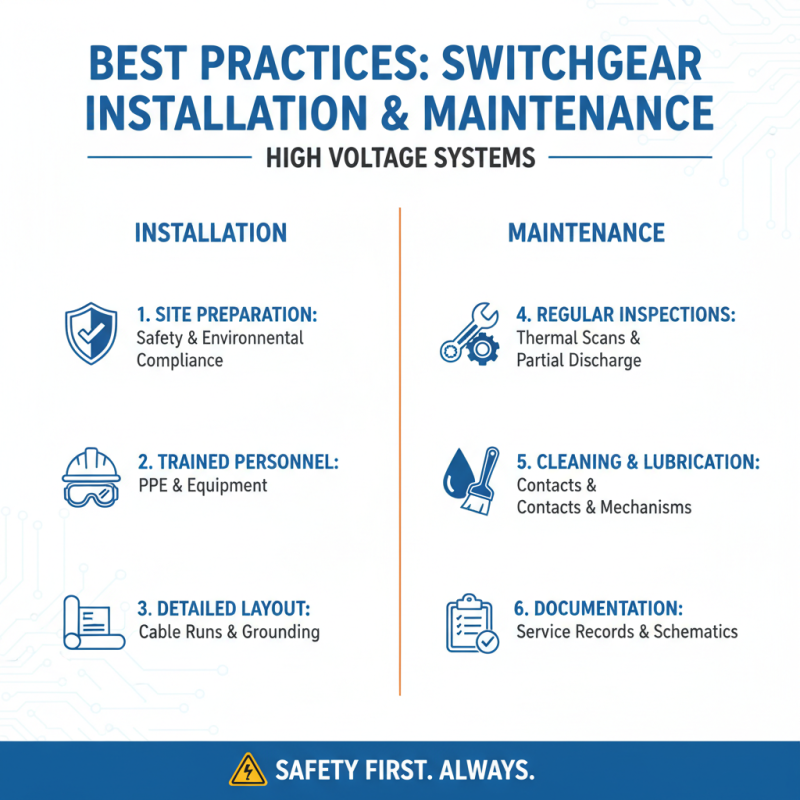
When installing high voltage switchgear, proper procedures are crucial. Begin by ensuring the site meets safety and environmental standards. All personnel must be trained and equipped with personal protective equipment. Having a detailed layout helps visualize the installation. This layout should illustrate cable runs and grounding points clearly.
Maintenance is just as important as installation. Regular inspections can identify wear and tear before it becomes problematic. Documentation of these inspections creates a valuable history. Moreover, maintenance schedules should not be overlooked. Many facilities skip them, leading to unforeseen issues.
Testing systems regularly ensures they operate correctly. Performing insulation resistance tests helps determine the health of the switchgear. However, keep in mind that not every abnormality signifies a failure; sometimes, it points to areas needing adjustment. It’s vital to refine your methods frequently, learning from mistakes to enhance overall performance.