Choosing the right Cable Branch Box Series is not a simple catalog decision. The box may look compact, yet it controls several critical connection points. A poor selection can create heat, moisture ingress, difficult maintenance, or unnecessary replacement costs.
Dr. J. H. V. van der Sluis, a recognized power-cable engineering specialist, has emphasized this practical principle: “A cable accessory must be designed as part of the system, not treated as an isolated component.” That idea shapes this guide. The correct series must match the cable size, conductor material, voltage class, fault level, installation environment, and required protection rating. Indoor switchgear rooms demand different features from outdoor sites exposed to rain, dust, salt, and temperature changes. Small details matter. Check the gland arrangement. Check the bending space. Check access for torque tools.
Experience also shows that technical data alone can mislead. A box may meet its nominal rating but still be awkward to install. That weakness appears later, during testing or emergency repair. It is easy to overlook. This Cable Branch Box Series guide will compare enclosure materials, connection layouts, insulation requirements, sealing performance, and maintenance considerations. It will also explain how engineers can verify manufacturer documents, test reports, and installation instructions before purchasing.
There is no universal best series. Only a better fit.
Readers should question assumptions, including familiar brands and attractive prices. A careful choice protects continuity, improves safety, and reduces avoidable lifecycle problems.
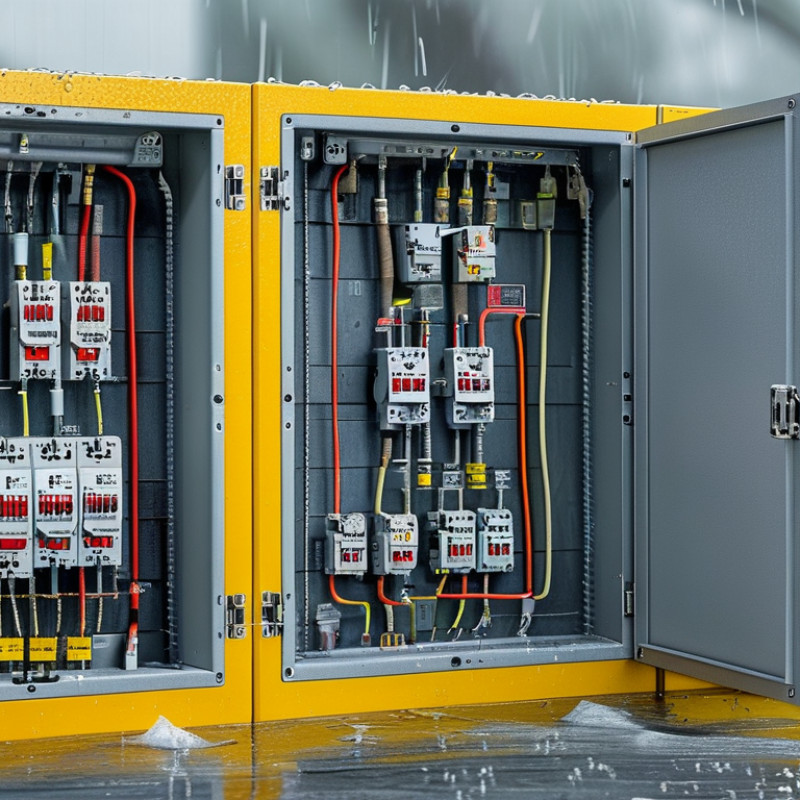
Start by defining what the box must do. Is it serving lighting circuits, motor feeders, or control cables? Count every incoming and outgoing cable. Then confirm the system voltage, operating current, and expected fault level. A box that looks spacious may still lack sufficient thermal capacity. Cable diameter and bending radius also affect the internal layout.
Operating conditions often decide the correct series. For outdoor installation, check the enclosure’s protection rating, ultraviolet exposure, rain, dust, and temperature range. Coastal or industrial sites may require stronger corrosion resistance. Indoor boxes still need protection from condensation and accidental impact. Review the installation height and maintenance access before choosing the enclosure size. Poor access can turn a simple inspection into a serious shutdown.
In field evaluations, I have seen teams focus on cable quantity alone. That approach is incomplete. Heat, vibration, and future circuit additions matter too. Leave practical space around terminals and maintain clear separation between circuits. Verify short-circuit withstand requirements with qualified engineers and current electrical standards. Documentation should match the actual installation, not an ideal drawing.
Choosing the right cable branch box series starts with the cable, not the box. Identify whether the installation uses power, control, signal, armored, flexible, or fire-resistant cables. Each type needs suitable entry space, insulation support, and sealing performance. Do not guess.
Measure the conductor size and cable outside diameter carefully. A cable marked 4 mm² may have different insulation thicknesses across constructions. Record the largest diameter, bending radius, and terminal capacity. Then count every incoming and outgoing cable. Leave room for separation, heat movement, and future maintenance. A crowded box can make a correct installation difficult.
Branching requirements also determine the series. A simple two-way branch may need fewer terminals than a multi-circuit distribution point. Check current ratings, voltage levels, grounding arrangements, enclosure protection, and the expected environment. Dust, moisture, vibration, and direct sunlight can change the selection. In field inspections, rushed measurements often cause the most trouble. I have seen installers choose a compact box, then struggle with sharp bends and loose covers. That choice looked efficient, but it was not. Review the wiring diagram, confirm compatible terminals, and follow applicable electrical standards. When the data remains uncertain, consult a qualified electrical professional before ordering.
Choosing a cable branch box starts with its protection rating, not its appearance. In field inspections, dust and water usually cause more trouble than expected. An IP rating helps describe resistance to solid particles and moisture. However, the test conditions may not match your site. A box rated for water jets may still fail under constant flooding.
Material selection also affects long-term reliability. Polycarbonate is light, impact-resistant, and suitable for many indoor or outdoor installations. Stainless steel offers strong mechanical protection, especially in industrial areas. Yet, metal can corrode when coatings are damaged or when chemicals remain on the surface. That detail is easy to miss. Temperature, sunlight, salt air, oil, and vibration should all influence the series you choose.
Tips: Inspect the installation area during its worst conditions, not its cleanest moment. Check cable entry seals, wall strength, drainage, and working space. Leave room for bending cables. Tight layouts often create stress at terminals. Also, confirm the enclosure’s temperature range and material compatibility with nearby chemicals. A higher protection rating is not automatically better; unused features can increase cost and complicate maintenance. Before ordering, compare test documentation with the actual environment. Small differences matter.
Choosing the right cable branch box series starts with the load, not the enclosure appearance. Record continuous current, peak demand, voltage, and conductor size before comparing models. A box rated just above normal load may still overheat during motor starts or seasonal demand. Leave practical capacity margin. In field inspections, loose terminals and crowded conductors often create more trouble than expected. Check fault ratings, ingress protection, temperature limits, and compatibility with the installation environment.
Safety features should be verified in documents and on the physical unit. Look for secure covers, touch-safe barriers, grounding provisions, and terminals that resist loosening under vibration. For outdoor or dusty locations, sealing performance matters as much as electrical rating. A maintenance-friendly design provides visible identification, reachable terminals, and space for testing without disturbing nearby cables. However, “easy access” can be misleading when covers require special tools or labels fade quickly. I have seen simple inspection access prevent small heating marks from becoming major faults.
Tips: Compare the box rating with measured load data, not guesswork. Confirm protection coordination with a qualified electrician. Photograph cable entries before closing the cover. Record torque values and inspection dates. Review the choice after six months; real operating conditions may expose assumptions.
| Cable Branch Box Series | Typical Rated Voltage | Typical Continuous Current | Recommended Cable Size Range | Enclosure Protection | Key Safety Features | Maintenance Requirement | Typical Application | Selection Guidance |
|---|---|---|---|---|---|---|---|---|
| Compact Low-Current Series | Up to 1,000 V AC | Up to 63 A | 1.5–16 mm² copper conductors | IP54–IP65, depending on installation conditions | Touch-safe terminals, insulated cable entries, flame-retardant enclosure, secure cover screws | Visual inspection every 6–12 months; retighten terminals only after de-energizing | Lighting circuits, small control panels, auxiliary power distribution | Choose this series when the calculated load remains below the terminal and cable ampacity limits, with suitable allowance for grouping and ambient temperature. |
| General-Purpose Distribution Series | Up to 1,000 V AC | 64–160 A | 10–70 mm² copper conductors | IP65–IP66 for indoor or sheltered outdoor use | Dedicated PE terminal, strain relief, gasketed cover, clear circuit identification area | Inspection every 6 months; check seals, cable glands, corrosion, heat discoloration, and terminal torque | Commercial buildings, workshops, machine feeders, and small industrial branches | A practical choice for common three-phase or single-phase branch circuits where moderate current capacity and environmental protection are required. |
| High-Current Industrial Series | Up to 1,000 V AC | 161–400 A | 50–240 mm² copper conductors | IP66–IP68 when correctly installed and tested | High-creepage insulation, robust gland plates, reinforced enclosure, shrouded live parts, verified short-circuit withstand rating | Thermal scanning or temperature checks during planned maintenance; torque verification according to the installation schedule | Motor feeders, production equipment, process plants, and heavy-duty distribution systems | Confirm the prospective short-circuit current, conductor arrangement, heat dissipation, and manufacturer-approved terminal configuration before selection. |
| Outdoor and Harsh-Environment Series | Up to 1,000 V AC | Up to 250 A | 16–120 mm² copper conductors | IP66–IP68; UV, rain, dust, and corrosion resistance must be verified | UV-resistant enclosure, weatherproof gasket, corrosion-resistant hardware, drainage or pressure-equalization provisions where applicable | Inspect after severe weather and at least annually; clean drainage paths and replace damaged seals or glands | Solar installations, outdoor equipment, utility infrastructure, agricultural facilities, and coastal locations | Do not select by IP rating alone; verify UV exposure, temperature range, chemical contact, flooding risk, and enclosure material compatibility. |
| Fire- and Smoke-Conscious Series | Up to 1,000 V AC | Up to 160 A | 4–70 mm² copper conductors | IP54–IP65, subject to the enclosure and cable-entry design | Low-smoke or halogen-reduced materials where specified, flame-retardant enclosure, secure terminal barriers, fire-resistant cable-entry options | Routine inspection of enclosure integrity, cable entries, labels, and signs of overheating; follow the site fire-safety schedule | Transportation facilities, public buildings, evacuation routes, and enclosed infrastructure | Use only where the project specification requires the relevant fire, smoke, toxicity, and circuit-integrity performance; confirm test documentation. |
| Maintenance-Friendly Modular Series | Up to 1,000 V AC | Up to 250 A | 10–120 mm² copper conductors | IP65–IP66 with replaceable or configurable cable-entry modules | Removable terminal blocks, segregated circuits, clear labeling, lockable cover, accessible test points | Designed for periodic access; inspect labels, terminal condition, gland tightness, and spare-module sealing | Facilities with frequent circuit changes, data centers, automated production lines, and service areas | Select this series when reduced downtime and future expansion are more important than the lowest initial purchase cost. |
Choosing the right cable branch box series requires more than checking current capacity. The enclosure must meet applicable electrical standards, environmental ratings, and installation rules. Confirm requirements under local codes and relevant IEC or UL standards with a qualified electrical professional. Check voltage, current, short-circuit strength, ingress protection, temperature range, and material performance. These details affect safety in factories, commercial buildings, and outdoor equipment areas.
Space also shapes the decision. Measure the available wall or cabinet area, including cable bending space and maintenance clearance. A compact box may fit today but restrict future inspection work. I once saw a neat installation become difficult after adding one feeder. The design looked efficient, but it lacked room for practical expansion. Leave spare terminal capacity, entry points, and usable internal space. Not every project needs the largest series. Oversizing can increase cost and complicate mounting.
Tips: Sketch the cable routes before selecting the series. Mark entry directions and service access. Ask whether future circuits may require larger conductors. Review the plan with an experienced installer, and record the selected ratings for later maintenance. Small assumptions can become expensive changes.
Select the series that meets IEC 60529 protection requirements, installation space limits, and future expansion plans.
Use the minimum IP rating required by the installation environment. IP6X indicates a dust-tight enclosure; IPX5 and IPX6 indicate protection against water jets.
Confirm internal wiring room, cable bend radius, terminal arrangement, and the enclosure dimensions before selecting a compact or larger series.
Choose a box with sufficient spare cable entries, terminals, and internal volume for planned circuits and maintenance access.
Protection levels shown are based on the IEC 60529 IP code: the first digit represents protection against solid objects and dust, while the second digit represents protection against water.