
Leave Your Message
-
Whatsapp
-
Wechat

Engineered for maximum uptime and efficiency in mission-critical IT and Telecom environments.
In the contemporary digital era, the backbone of global connectivity and computational power lies within data centers and telecommunications networks. The proliferation of Artificial Intelligence (AI), Machine Learning (ML), 5G networks, and the Internet of Things (IoT) has triggered an unprecedented surge in data generation and processing requirements. Consequently, the commercial and industrial landscape for power infrastructure is undergoing a radical transformation.
Data centers are among the most energy-intensive facilities on the planet, often consuming as much electricity as small cities. The metric driving commercial decisions today is Power Usage Effectiveness (PUE). Hyperscale operators (such as Google, AWS, and Meta) and major telecom providers are under immense pressure to lower their PUE close to the ideal 1.0. In this equation, power distribution losses play a critical role. Legacy transformers with high no-load and load losses are no longer commercially viable. The industry is shifting rapidly from a purely Capital Expenditure (CapEx) focus to a Total Cost of Ownership (TCO) and Operational Expenditure (OpEx) model, where the energy savings of high-efficiency transformers over a 20-30 year lifespan far outweigh their initial procurement costs.
As telecom operators deploy millions of 5G macro and micro base stations globally, the decentralized demand on local power grids is staggering. 5G base stations consume significantly more power than their 4G predecessors. This necessitates robust, compact, and highly efficient step-down transformers at the edge of the grid. Furthermore, strict Environmental, Social, and Governance (ESG) mandates are forcing the industry to adopt green energy solutions. Transformers are now evaluated not just on electrical performance, but on their carbon footprint, recyclability, and the environmental safety of their insulating materials.
Selecting the correct transformer type is not a mere engineering choice; it is a strategic decision that impacts facility safety, uptime, and scalability. Below is an in-depth analysis of how specific transformer technologies map to critical IT and telecom scenarios.
Preferred Tech: SC(B) Series Dry-Type Cast Transformers
In massive server halls, bringing high voltage as close to the server racks as possible minimizes line losses. Dry-Type Transformers are the absolute standard for indoor data center environments. Because they use cast resin instead of combustible oil for insulation and cooling, they eliminate fire hazards and the need for expensive fire-suppression vaults or oil-catch basins. Products like the SC(B)10 and 11 offer exceptional short-circuit resistance and can handle the non-linear harmonic loads generated by thousands of server power supply units (PSUs) and Uninterruptible Power Supplies (UPS).
Preferred Tech: S13-M Fully Sealed Oil-Immersed Transformers
Telecommunication infrastructure is heavily distributed, often located in harsh, remote, or highly variable outdoor climates. The S13-M Fully Sealed Transformer is hermetically sealed, meaning the insulating oil never comes into contact with the atmosphere. This prevents moisture ingress and oil oxidation, resulting in a practically maintenance-free lifespan—a crucial commercial advantage for telecom operators managing thousands of unmanned sites. Their superior heat dissipation allows them to handle the dynamic load profiles of cellular traffic peaks.
Preferred Tech: 3D Wound Core Transformers (SCB-RL / S13-M.RL)
Edge computing brings processing power closer to the end-user to reduce latency for applications like autonomous driving and smart cities. These micro-data centers are often deployed in dense urban environments, office buildings, or even retrofitted shipping containers where space is at an absolute premium. The Triangular Three-Dimensional Wound Core design offers a highly compact footprint. Furthermore, the symmetrical magnetic circuit significantly reduces operational noise and vibration, making it ideal for deployment in populated commercial or residential zones without causing acoustic disturbances.
Preferred Tech: Amorphous Alloy Transformers (SC(B)H15 / S(B)H15M)
Tier III and Tier IV data centers require 2N or N+1 redundancy, meaning many transformers operate at partial loads (often below 50% capacity) just waiting for a failover event. In such scenarios, "no-load losses" (the energy consumed just to keep the transformer magnetized) become a massive financial drain. Amorphous Alloy Transformers utilize a specialized metallic glass core that reduces no-load losses by up to 70-80% compared to traditional silicon steel. Over a vast data center campus, this translates to millions of dollars in OpEx savings and a massive reduction in greenhouse gas emissions.
The intersection of heavy electrical engineering and digital technology is creating a new paradigm for power transformers. As we look toward the next decade of data center and telecom expansion, several key trends are dictating R&D and commercial procurement strategies.
Transformers are transforming from passive electrical components into active, intelligent nodes on the smart grid. The integration of IoT sensors allows for real-time monitoring of winding temperatures, partial discharge, and Dissolved Gas Analysis (DGA) in oil-immersed units. By feeding this data into AI-driven predictive maintenance models, facility managers can anticipate failures before they result in catastrophic downtime. Digital Twin technology allows operators to simulate load changes and thermal dynamics in a virtual environment, optimizing cooling strategies and extending the asset's lifecycle.
While dry-type transformers dominate indoors, high-capacity outdoor substations still rely on liquid cooling. The trend is rapidly shifting away from traditional mineral oils towards synthetic and natural ester fluids (vegetable oil-based). These fluids possess a much higher flash point (enhancing fire safety) and are fully biodegradable. For telecom companies deploying infrastructure in environmentally sensitive areas, ester-filled transformers mitigate the risk of ecological damage in the event of a leak.
With servers operating on DC power and renewable energy sources (like solar) generating DC power, the traditional AC-to-DC conversion steps cause significant energy loss. The future points towards Solid-State Transformers utilizing advanced power electronics (like Silicon Carbide - SiC) to step down voltage and convert AC to DC natively, paving the way for pure DC data centers that boast unprecedented efficiency levels.
Hangbian Electric Power Technology Co., Ltd. is a high-tech enterprise integrating research and development, design, production, sales, and service. The company boasts strong technical capabilities and advanced production testing equipment, specializing in the manufacture of power transformers, pre-fabricated substations, box-type substations, high-voltage KYN28-12 indoor switchgear, high-voltage KYN28-24 indoor switchgear, high-voltage KYN6 1-40.5 indoor switchgear, DRM-12/CFV gas-insulated switchgear, GTXGN15-12 solid-insulated ring main units, XGN-12 ring main units, DFW.12 outdoor switchgear: GCS, GCK, MNS, and GGD low-voltage switchgear; XL-21, JP cabinets, PZ30, various non-standard boxes, control boxes, and other series products as a modern enterprise.
The company has been rated as an "AAA" credit enterprise by the financial system for many consecutive years, recognized as a provincial technology-based small and medium-sized enterprise, a national high-tech enterprise, and has achieved "A" grade credit status in Zhejiang Province for "Contract Compliance and Creditworthiness." It has successively passed 1SO9001 international quality system, ISO14001 environmental management system, OHSAS18001 occupational health and safety system, CCC, CQC product certifications, as well as testing reports for power transformers, low and high-voltage complete testing reports, and national high-voltage transmission and distribution type tests. The company has established a modern enterprise management system and a comprehensive quality assurance system.
Hangbian Electric Power Technology Co., Ltd. is committed to the pursuit of excellence, the implementation of 6S management, SFC-MES lean integrated manufacturing execution system, and the pursuit of "zero defects, stable lean quality". The company adheres to the concept of people-oriented and sustainable development, focuses on attracting and cultivating highly educated and high-quality technical management talents, and has established a professional R&D team, an elite sales team and a caring after-sales service team. Hangbian Power Technology Co., Ltd. has a clear positioning, aims to create a high-quality brand, emphasizes "endless innovation and endless service", and the unremitting pursuit of quality and innovation drives the company to move forward continuously, ensuring that the company is always in a leading position in the industry, while providing customers with excellent value.
Explore our full range of advanced transformer solutions designed for the rigorous demands of modern Telecommunications and Data Center infrastructures.
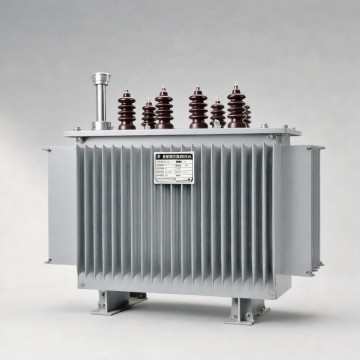 S11 Oil Immersed Power Transformer
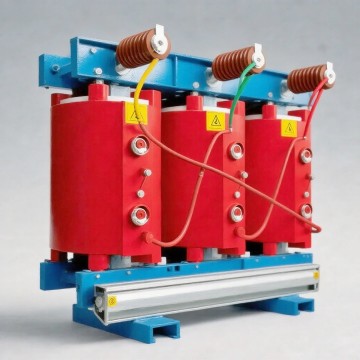 SC(B)10, 11 Dry Type Cast Transformer
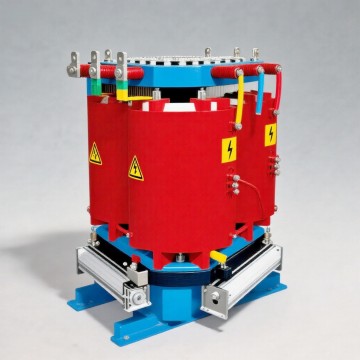 SCB-RL Triangular 3D Wound Core Dry-Type Power Transformer
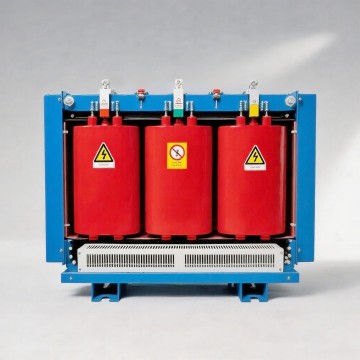 SC(B)H15 Amorphous Alloy Dry-Type Transformer
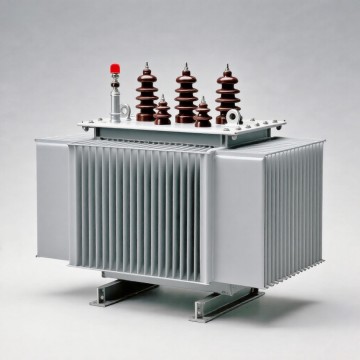 S(B)H15M Amorphous Alloy Distribution Transformer
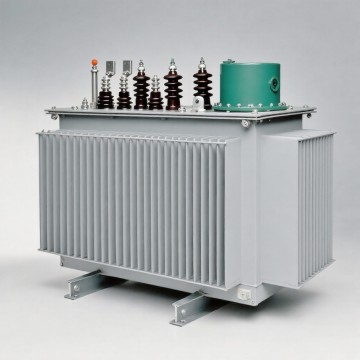 S11-M-ZT ON-Load Capacity-Changing Transformer
S13-M Fully Sealed Oil Immersed Transformer
S11-M-ZT ON-Load Capacity-Changing Transformer
S13-M Fully Sealed Oil Immersed Transformer
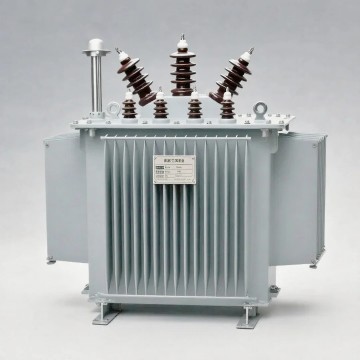 S13-M. RL/S11-M. RL 3D Triangle Coil Core Power Transformer