Leave Your Message
-
Whatsapp
-
Wechat

In the expansive realm of public infrastructure and civil engineering, the transformer definition extends far beyond the basic principles of electromagnetism. While traditionally defined as a static electrical device that transfers electrical energy between two or more circuits through electromagnetic induction, its definition within civil engineering is intrinsically linked to urban survival, energy distribution, and infrastructural resilience. A transformer in this context acts as the crucial beating heart of any large-scale developmental project, serving as the indispensable bridge between ultra-high-voltage national power grids and the localized, low-voltage consumption networks required by public facilities.
When civil engineers and urban planners design modern cities, they must account for immense electrical loads required by subways, water treatment plants, airports, and smart highways. Here, the transformer is defined by its capacity to safely and efficiently step down transmission voltages (often ranging from 110kV to 35kV) to operational distribution voltages (such as 10kV or 400V). Without these highly engineered apparatuses, the transmission of electricity over long distances would result in catastrophic energy losses, rendering modern public infrastructure financially and operationally unviable.
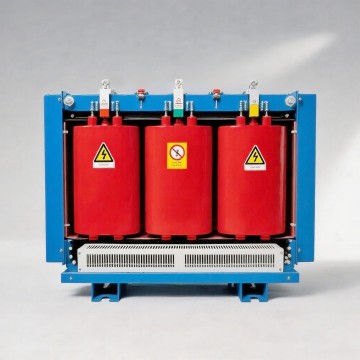
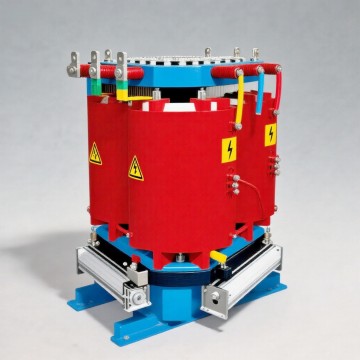
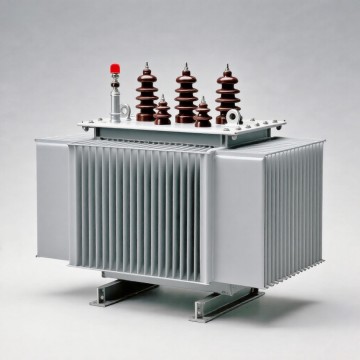
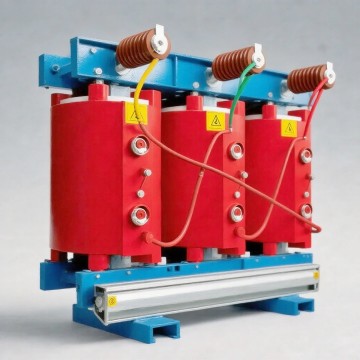
Furthermore, in contemporary civil works, transformers are defined by their environmental adaptability and safety profiles. Devices like the SC(B)10, 11 Dry Type Cast Transformers are specifically engineered to eliminate fire hazards in densely populated public spaces, while fully sealed oil-immersed units are defined by their ruggedness against harsh, corrosive environmental conditions found in underground or coastal civil engineering projects.
The commercial and industrial landscape for transformers utilized in public infrastructure has undergone a massive paradigm shift over the last decade. Globally, the rapid urbanization of developing nations and the critical need to upgrade aging electrical grids in developed countries have driven unprecedented commercial demand. The market is currently characterized by a stringent regulatory environment that prioritizes energy efficiency, carbon footprint reduction, and lifecycle sustainability. Governments and international regulatory bodies have implemented rigorous EcoDesign directives and Department of Energy (DOE) standards, forcing a commercial pivot away from traditional silicon steel architectures.
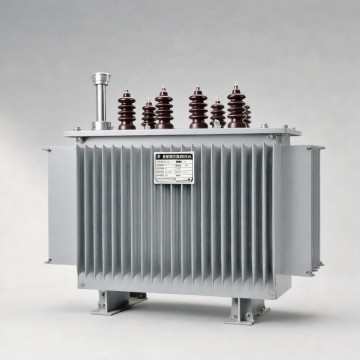
Industrially, this has led to the mainstream commercialization of advanced materials, most notably amorphous alloys. Products such as the S(B)H15M Amorphous Alloy Distribution Transformer represent the pinnacle of this industrial evolution. By utilizing non-crystalline magnetic materials, these transformers drastically reduce no-load losses (core losses) by up to 70-80% compared to conventional models. In the context of public infrastructure—where transformers operate continuously 24/7 regardless of the actual load—this reduction in no-load loss translates to millions of dollars in saved taxpayer funds and a massive reduction in greenhouse gas emissions over the project's lifespan.
From a supply chain perspective, the industrial status quo is also heavily focused on modularity and rapid deployment. Pre-fabricated substations and box-type substations are becoming the commercial standard for civil engineering projects like highway expansions and high-speed rail networks. These integrated solutions allow civil engineers to bypass lengthy on-site construction phases, opting instead for plug-and-play transformer solutions that are factory-tested and ready for immediate grid integration.
In underground civil engineering projects like subways and urban rail transit systems, space is at a premium and safety is non-negotiable. Transformers deployed here form the backbone of the traction power network and auxiliary lighting systems. Due to strict fire safety codes, Dry-Type Cast Transformers are exclusively utilized. These units use epoxy resin casting instead of flammable insulating oils, ensuring they are self-extinguishing and do not emit toxic gases during a fault. Furthermore, their compact design allows them to be installed in confined subterranean vaults without extensive ventilation infrastructure.
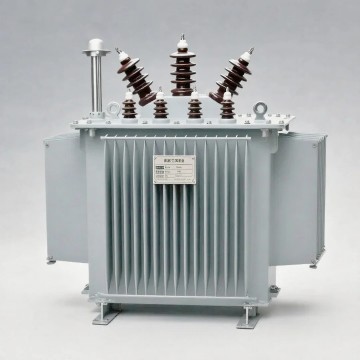
Large-scale civil water infrastructure operates in highly corrosive, moisture-rich environments. The continuous operation of massive pumps, centrifuges, and filtration membranes requires an uninterrupted, high-capacity power supply. Fully Sealed Oil Immersed Transformers (like the S13-M series) are critical here. Their hermetically sealed design prevents moisture and airborne corrosive chemicals from contaminating the insulating oil, ensuring zero maintenance requirements and preventing catastrophic short circuits that could lead to public water shortages.
Modern airports are essentially small cities, demanding extreme power redundancy for radar systems, runway lighting, and terminal operations. Transformers in aviation infrastructure must exhibit exceptional fault tolerance and harmonic mitigation. The implementation of Three-Dimensional Triangle Coil Core Transformers (like the SCB-RL) provides symmetrical magnetic circuits, which significantly reduces electromagnetic interference (EMI) that could otherwise disrupt sensitive air traffic control communication arrays.
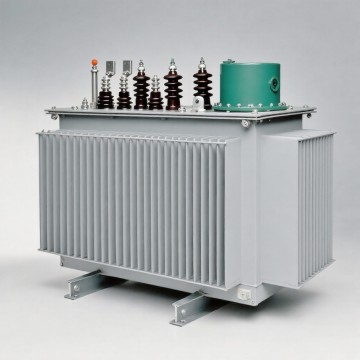
As civil engineering adapts to the electric vehicle (EV) revolution, highway infrastructure is being retrofitted with mega-charging hubs. These hubs create massive, unpredictable spikes in electrical load. ON-Load Capacity-Changing Transformers (like the S11-M-ZT) are revolutionary in this scenario. They dynamically adjust their capacity rating without disconnecting from the grid, seamlessly handling the surge when multiple EVs plug in simultaneously, and scaling down during off-peak hours to minimize energy loss.
The future of transformer technology within public infrastructure is inextricably linked to the rise of Artificial Intelligence (AI) and the Industrial Internet of Things (IIoT). As civil engineering projects evolve into "smart cities," the transformers powering them are transforming from passive electrical components into active, intelligent grid nodes. The most profound development trend is the integration of AI-driven predictive maintenance systems. By embedding sophisticated sensors within the transformer core and oil reservoirs, operators can continuously monitor variables such as oil temperature, vibration acoustics, and perform real-time Dissolved Gas Analysis (DGA).
AI algorithms process this vast stream of telemetric data to detect microscopic faults—such as partial discharges or insulation degradation—months before they can cause a catastrophic failure. In public infrastructure, where a power outage can paralyze a city's transport or water network, this predictive capability is revolutionary. Digital Twin technology is also becoming a standard in civil engineering design; virtual replicas of transformers are simulated under various extreme weather and load conditions to optimize urban grid layouts prior to physical construction.
Furthermore, the structural design of transformers is advancing. The widespread adoption of Three-Dimensional Triangular Wound Cores is a clear trend. This geometric innovation ensures a perfectly symmetrical magnetic circuit, which not only reduces the physical footprint of the transformer—a critical factor in dense urban civil engineering—but also significantly lowers operational noise pollution, making them highly suitable for installation near residential zones, hospitals, and schools. As global infrastructure marches towards net-zero emissions, the synergy between eco-friendly materials like amorphous alloys and AI-optimized load management will define the next generation of civil engineering power distribution.
Hangbian Electric Power Technology Co., Ltd.is a high-tech enterprise integrating research and development, design, production,sales, and service, The company boasts strong technical capabilities and advanced production testing equipment,specializing in the manufacture of power transformers, pre-fabricated substations, box-type substations,high-voltage KYN28-12 indoors witchgear, high-voltage KYN28-24 indoor switchgear, high-voltage KYN6 1-40.5 indoor switchgear, DRM-12/CFV gas-insulated switchgear, GTXGN15-12 solid-insulated ring main units, XGN-12 ring main units, DFW.12 outdoor switchgear: GCS,GCK, MNS, and GGD low-voltage switchgear; XL-21,JP cabinets, PZ30, various non-standard boxes, control boxes, and other series products as amodern enterprise.
The company has been rated as an "AAA" credit enterprise by the financial system for many consecutive years, recognized as a provincial technology-based small and medium-sized enterprise, a national high-tech enterprise, and has achieved "A" grade credit status in Zhejiang Province for "Contract Compliance and Creditworthiness." It has successively passed 1SO9001 international quality system, ISO14001 environmental management system, OHSAS18001 occupational health and safety system, CCC, CQC product certifications, as well as testing reports for power transformers, low and high-voltage complete testing reports, and national high-voltage transmission and distribution type tests. The company has established a modern enterprise management system and a comprehensive quality assurance system.
Hangbian Electric Power Technology Co., Ltd. is committed to the pursuit of excellence, the implementation of 6S management, SFC-MES lean integrated manufacturing execution system, and the pursuit of "zero defects, stable lean quality". The company adheres to the concept of people-oriented and sustainable development, focuses on attracting and cultivating highly educated and high-quality technical management talents, and has established a professional R&D team, an elite sales team and a caring after-sales service team. Hangbian Power Technology Co., Ltd. has a clear positioning, aims to create a high-quality brand, emphasizes "endless innovation and endless service", and the unremitting pursuit of quality and innovation drives the company to move forward continuously, ensuring that the company is always in a leading position in the industry, while providing customers with excellent value.