Leave Your Message
-
Whatsapp
-
Wechat

Brazil represents one of the most dynamic, expansive, and rapidly evolving energy markets in Latin America. With a vast geographic footprint and a booming population, the demand for reliable electricity distribution is at an all-time high. The backbone of this massive electrical distribution network—the National Interconnected System (SIN)—relies heavily on advanced power and distribution transformers. As a leading Transformer Core Types Manufacturer & Supplier in Brazil, we understand that the core of the transformer dictates its efficiency, longevity, and performance under the unique environmental and electrical stress factors present in South America.
The Brazilian industrial sector, heavily concentrated in states like São Paulo, Minas Gerais, and Rio de Janeiro, requires robust power solutions capable of handling heavy electrical loads without significant energy losses. Furthermore, the Brazilian government, through the National Electric Energy Agency (ANEEL) and the National Energy Conservation Program (Procel), has been enforcing stricter energy efficiency regulations. This regulatory environment has catalyzed a massive shift in the types of transformer cores being manufactured and supplied to the Brazilian market. Outdated, high-loss transformers are rapidly being replaced by state-of-the-art units featuring optimized core geometries and advanced magnetic materials.
Additionally, Brazil is a global powerhouse in renewable energy. With massive hydroelectric plants like Itaipu and Belo Monte, alongside an exponential surge in wind and solar power generation in the Northeast region (such as in Bahia and Rio Grande do Norte), the grid requires specialized transformers. These renewable energy sources often produce fluctuating power outputs, necessitating transformers with specific core types that offer ultra-low no-load losses and high resilience against harmonic distortions.
The efficiency of a transformer is fundamentally determined by the material and construction of its core. In the Brazilian market, manufacturers and suppliers are focusing on three primary core technologies to meet diverse industrial and commercial demands. Integrating AI-assisted design and precision manufacturing, these core types are engineered to minimize hysteresis and eddy current losses, which is vital for Brazil's energy conservation goals.
Cold Rolled Grain Oriented (CRGO) silicon steel remains the traditional standard for power transformers in Brazil. Through advanced laser-scribing and step-lap joint technology, modern CRGO cores offer significantly reduced noise levels and lower core losses. They are the workhorse for standard urban power distribution networks across major Brazilian municipalities.
Amorphous metal cores feature a non-crystalline structure that allows for incredibly easy magnetization and demagnetization. This results in no-load losses being reduced by up to 70% compared to traditional silicon steel. In Brazil's rapidly expanding solar and wind farms, where transformers operate under light loads for extended periods, amorphous core transformers are the most economically and environmentally viable solution.
The Triangular Three-Dimensional (3D) Wound Core represents a breakthrough in geometric magnetic design. Featuring three identical core limbs arranged in an equilateral triangle, it ensures a perfectly symmetrical magnetic circuit. This design heavily mitigates zero-sequence currents, reduces harmonic interference, and operates exceptionally quietly. It is highly sought after for commercial high-rises and data centers in São Paulo.
Looking towards the future of Brazil's smart grid, modern transformer cores are being integrated with IoT sensors and AI-driven predictive maintenance algorithms. These systems monitor core temperature, vibration, and magnetic flux density in real-time, preventing catastrophic failures and optimizing the lifecycle of the electrical infrastructure across the vast Brazilian territory.
The diversity of Brazil's climate and industrial geography means that a "one-size-fits-all" approach to transformer supply is ineffective. As premier manufacturers and suppliers, we tailor our transformer core types to meet specific localized application scenarios across the country.
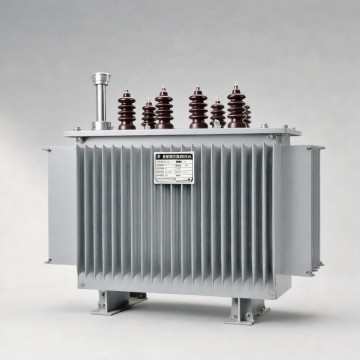
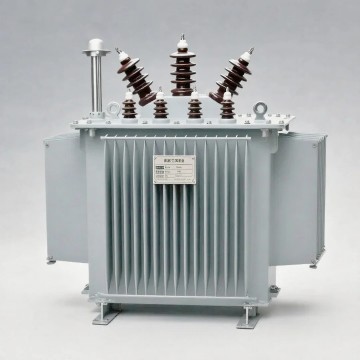
1. The Amazon Rainforest and Northern Grid (Isolated Systems): The northern region of Brazil presents extreme environmental challenges, including high humidity, heavy rainfall, and remote locations with difficult access. For these isolated micro-grids, robust Fully Sealed Oil-Immersed Transformers (like our S13-M series) are deployed. The sealed design prevents moisture ingress, protecting the core from oxidation and ensuring uninterrupted power supply to remote Amazonian communities and mining operations.
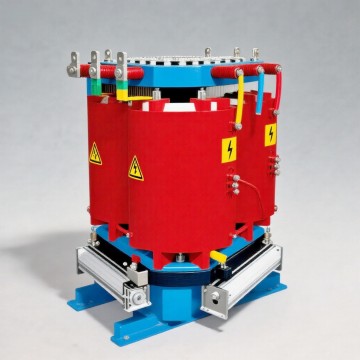
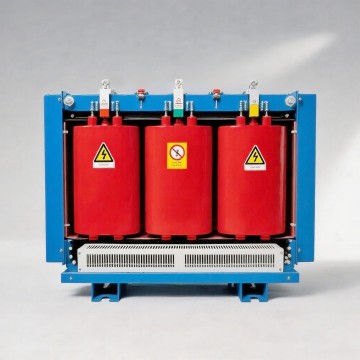
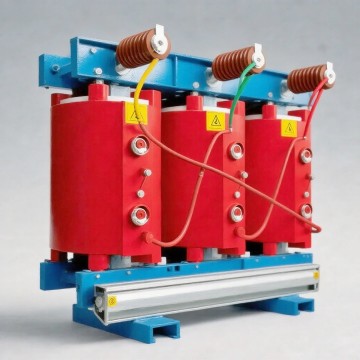
2. Urban and Industrial Hubs (Southeast Region): In the densely populated metropolitan areas of São Paulo and Rio de Janeiro, space is at a premium, and fire safety regulations are incredibly strict. Here, Dry-Type Cast Transformers equipped with 3D wound cores or high-grade silicon steel cores are the standard. Because they do not use flammable insulating oil, they can be safely installed indoors in commercial skyscrapers, shopping malls, underground subway systems, and heavy manufacturing plants. The 3D core design also ensures that operational noise is kept to an absolute minimum, a crucial factor in urban environments.
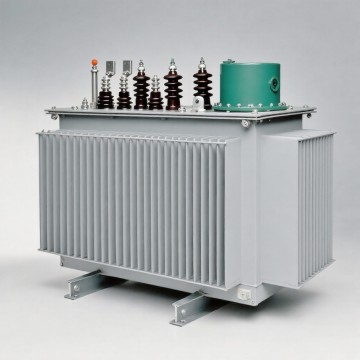
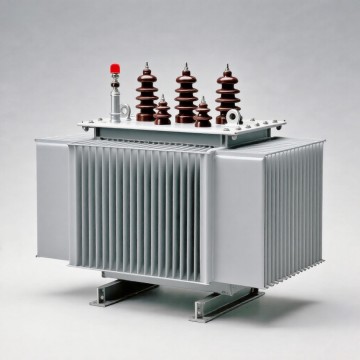
3. The Renewable Energy Corridor (Northeast Region): The Brazilian Northeast is experiencing a massive boom in wind and solar energy investments. Renewable energy generation is inherently intermittent. To handle the fluctuating voltages and ensure grid stability, Amorphous Alloy Distribution Transformers and ON-Load Capacity-Changing Transformers are heavily utilized. The ultra-low no-load losses of the amorphous cores ensure that even when the sun isn't shining or the wind isn't blowing, the energy drawn from the grid to keep the transformer magnetized is negligible, maximizing the overall profitability of the renewable energy plant.
To support the massive infrastructural growth in Brazil and globally, advanced manufacturing capabilities are required. Below is an overview of our corporate strength, technological prowess, and commitment to quality that makes us a leading supplier in the global electrical power technology sector.
Hangbian Electric Power Technology Co., Ltd.is a high-tech enterprise integrating research and development, design, production,sales, and service, The company boasts strong technical capabilities and advanced production testing equipment,specializing in the manufacture of power transformers, pre-fabricated substations, box-type substations,high-voltage KYN28-12 indoors witchgear, high-voltage KYN28-24 indoor switchgear, high-voltage KYN6 1-40.5 indoor switchgear, DRM-12/CFV gas-insulated switchgear, GTXGN15-12 solid-insulated ring main units, XGN-12 ring main units, DFW.12 outdoor switchgear: GCS,GCK, MNS, and GGD low-voltage switchgear; XL-21,JP cabinets, PZ30, various non-standard boxes, control boxes, and other series products as amodern enterprise.
The company has been rated as an "AAA" credit enterprise by the financial system for many consecutive years, recognized as a provincial technology-based small and medium-sized enterprise, a national high-tech enterprise, and has achieved "A" grade credit status in Zhejiang Province for "Contract Compliance and Creditworthiness." It has successively passed 1SO9001 international quality system, ISO14001 environmental management system, OHSAS18001 occupational health and safety system, CCC, CQC product certifications, as well as testing reports for power transformers, low and high-voltage complete testing reports, and national high-voltage transmission and distribution type tests. The company has established a modern enterprise management system and a comprehensive quality assurance system.
Hangbian Electric Power Technology Co., Ltd. is committed to the pursuit of excellence, the implementation of 6S management, SFC-MES lean integrated manufacturing execution system, and the pursuit of "zero defects, stable lean quality". The company adheres to the concept of people-oriented and sustainable development, focuses on attracting and cultivating highly educated and high-quality technical management talents, and has established a professional R&D team, an elite sales team and a caring after-sales service team. Hangbian Power Technology Co., Ltd. has a clear positioning, aims to create a high-quality brand, emphasizes "endless innovation and endless service", and the unremitting pursuit of quality and innovation drives the company to move forward continuously, ensuring that the company is always in a leading position in the industry, while providing customers with excellent value.
As Brazil continues to modernize its electrical grid, the transformer industry is undergoing a significant technological transformation. The integration of Artificial Intelligence (AI) and the Internet of Things (IoT) is no longer a futuristic concept but a present reality. Smart transformers equipped with advanced sensors can autonomously monitor the health of their cores, detect partial discharges, and analyze dissolved gases in the insulating oil. This data is processed by AI algorithms to predict maintenance needs long before a failure occurs, drastically reducing downtime for critical Brazilian industries.
Furthermore, the push towards decarbonization is heavily influencing transformer core manufacturing. Regulatory bodies in Brazil are expected to implement even stricter energy efficiency mandates by 2030. This will inevitably accelerate the phase-out of older, high-loss silicon steel cores in favor of highly efficient amorphous alloys and precision-engineered 3D wound cores. The focus is shifting towards evaluating the Total Cost of Ownership (TCO) rather than just the initial purchase price, acknowledging that a highly efficient transformer core will save millions of Brazilian Reais in wasted electricity over its 30-to-40-year lifespan.
By partnering with forward-thinking manufacturers and suppliers, Brazilian utility companies and private enterprises can ensure their infrastructure is not only robust enough to handle today's demands but is also smart, sustainable, and ready for the energy challenges of tomorrow.