Leave Your Message
-
Whatsapp
-
Wechat

In the modern era of hyper-connectivity, the uninterrupted operation of Data Centers and Telecommunications networks forms the absolute backbone of the global digital economy. At the heart of this continuous operation lies the highly sophisticated electrical infrastructure, primarily driven by Low Voltage (LV) Switchgear. These complex assemblies of switching devices, associated control, measuring, protective, and regulating equipment are meticulously engineered to control, protect, and isolate electrical equipment within data server rooms and telecommunication base stations.
Unlike standard commercial applications, the power distribution requirements for data centers and telecommunications demand an unprecedented level of reliability, redundancy, and intelligence. A momentary power fluctuation or a microsecond of downtime can lead to catastrophic data loss, massive financial repercussions, and severe disruption of critical communication services. Consequently, Low Voltage Switchgear deployed in these environments must adhere to stringent international standards, offering robust fault-clearing capabilities, seamless integration with Uninterruptible Power Supplies (UPS), and advanced thermal management to handle the intense, continuous loads characteristic of modern IT infrastructure.
The evolution of LV switchgear has transitioned from purely mechanical isolation frameworks to highly intelligent, IoT-enabled hubs. Today, these systems actively monitor power quality, predict potential component failures through advanced analytics, and dynamically balance loads across multiple server racks, ensuring that the critical PUE (Power Usage Effectiveness) metrics of modern data centers are optimized to their fullest potential.
The global industrial landscape for Low Voltage Switchgear in the ICT (Information and Communication Technology) sector is experiencing an unprecedented surge. This explosive growth is primarily catalyzed by the rapid proliferation of 5G networks, the exponential rise in cloud computing adoption, and the intensive power demands of Artificial Intelligence (AI) and Machine Learning (ML) workloads. Hyperscale data center operators and global telecommunication conglomerates are aggressively expanding their physical footprints, necessitating vast deployments of highly specialized, high-density power distribution networks.
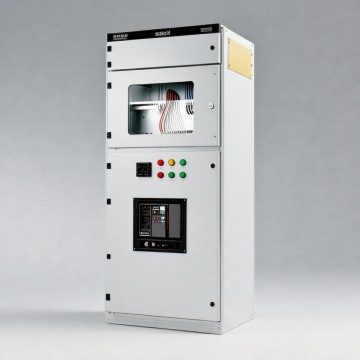
Commercially, the shift towards hyperscale facilities has completely redefined the procurement and engineering of LV switchgear. Traditional switchgear designs often struggle to accommodate the immense power densities required by modern AI server racks, which can easily exceed 30kW to 50kW per rack. Industrial manufacturers are now compelled to innovate, developing ultra-compact, withdrawable switchgear modules like the MNS and GCS series. These advanced units allow for rapid, hot-swappable maintenance without necessitating facility-wide power shutdowns, aligning perfectly with the Tier III and Tier IV uptime requirements mandated by the Uptime Institute.
Simultaneously, the commercial landscape is being reshaped by the advent of Edge Computing. As data processing moves closer to the end-user to minimize latency for applications like autonomous driving and industrial IoT, micro-data centers are being deployed in highly diverse, often harsh, environments. This decentralized network requires Low Voltage Switchgear that is not only exceptionally compact but also highly resilient to environmental stressors such as temperature fluctuations, humidity, and atmospheric particulates. The demand for ruggedized, environmentally friendly gas-insulated and solid-insulated switchgear has thus seen a dramatic industrial uptick, providing localized, fault-tolerant power distribution at the network's edge.
Furthermore, the integration of smart grid technologies is compelling commercial operators to seek switchgear that facilitates bi-directional energy flow and seamless integration with localized renewable energy sources and advanced battery energy storage systems (BESS). This commercial pivot towards sustainability is forcing traditional switchgear manufacturers to evolve into holistic energy management solution providers.
The deployment of Low Voltage Switchgear within the telecommunications and data center domains is highly nuanced, with specific architectural configurations tailored to the unique demands of different critical environments. Understanding these deep-dive scenarios illuminates the engineering marvel behind modern power distribution.
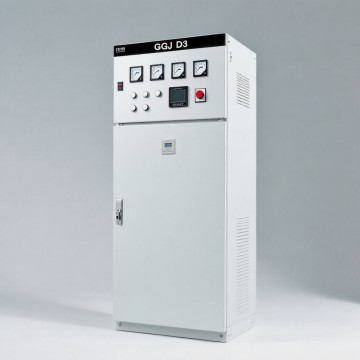
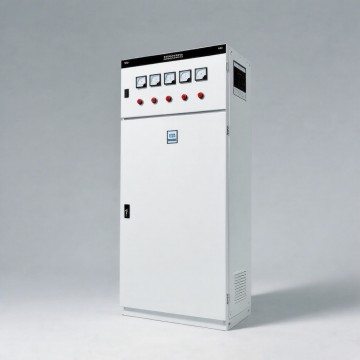
In a hyperscale environment, the electrical architecture is massive and complex. Medium voltage power from the utility grid is stepped down via massive transformers and fed directly into the main Low Voltage Switchgear line-up. Here, heavy-duty Air Circuit Breakers (ACBs) with high short-circuit breaking capacities (often exceeding 100kA) are utilized. The switchgear must manage the intricate dance between utility power, backup diesel generators, and massive UPS banks. In these scenarios, intelligent switchgear equipped with automatic transfer switches (ATS) ensures that in the event of a grid failure, the transition to generator power occurs flawlessly, while the UPS systems carry the critical load during the transition phase. Intelligent reactive power compensation cabinets (like the GGJ series) are heavily utilized here to maintain an optimal power factor, reducing energy waste and avoiding utility penalties.
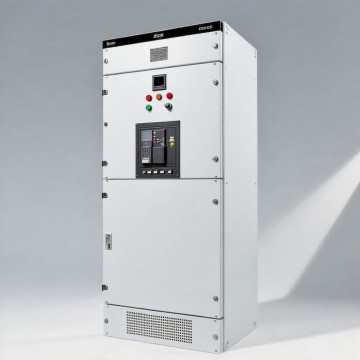
Moving deeper into the data center "white space" (the actual server floor), the power must be meticulously distributed to individual server racks. This is where modular, withdrawable switchgear such as the MNS or GCS series shines. These units act as sub-distribution boards, feeding power to the Power Distribution Units (PDUs) located within or above the server cabinets. The critical requirement here is precise load monitoring and phase balancing. Advanced LV switchgear at this level features integrated digital meters that monitor voltage, current, harmonics, and energy consumption down to the individual circuit level, allowing facility managers to optimize server placement and prevent localized thermal overloads.
Telecommunication MSCs act as the central nervous system for mobile networks. The switchgear deployed here must support a vast array of Direct Current (DC) rectifiers alongside traditional Alternating Current (AC) loads. Because telecom equipment operates predominantly on -48V DC power, the AC Low Voltage Switchgear serves as the primary gateway, feeding immense power to the rectifier systems. Reliability is paramount; hence, these switchgear panels are designed with fully redundant A and B power feeds. Fixed-type switchgear like the GGD series is often favored in these scenarios for its robust, unyielding structural integrity and high current-carrying capacity, ensuring the core telecom network remains active regardless of external grid volatility.
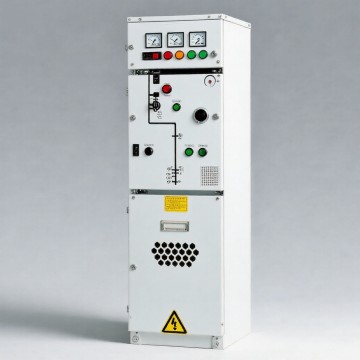
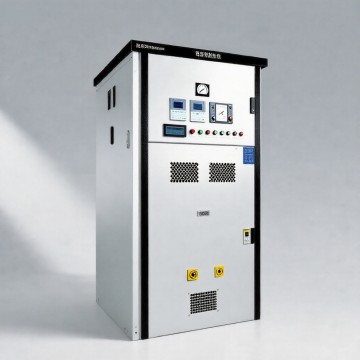
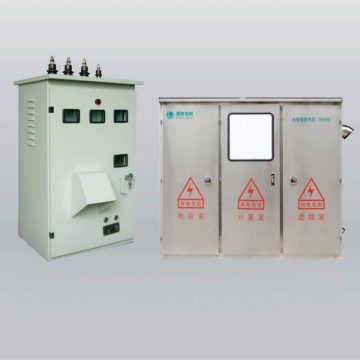
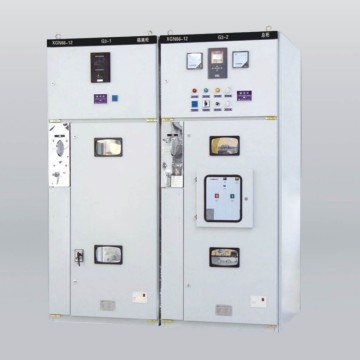
The rollout of 5G technology has drastically increased the power consumption of individual cell towers due to the higher density of active antenna units (AAUs). At the base station level, space is severely restricted. Here, highly compact, box-type fixed AC metal-enclosed switchgear (such as the HXGN66-12) and low-voltage prepaid equipment (like the SXDF-0.4) are deployed. These units must withstand extreme outdoor temperature variations, resist moisture ingress, and provide reliable circuit protection for the sensitive RF equipment. They often incorporate remote monitoring capabilities, allowing telecom operators to reset tripped breakers or monitor power consumption from a centralized network operations center (NOC), drastically reducing the need for costly on-site maintenance dispatches.
As the digital landscape accelerates, the design and functionality of Low Voltage Switchgear for Data Centers and Telecommunications are undergoing a radical transformation. The future is defined by three core pillars: digitalization, environmental sustainability, and extreme modularity.
The integration of Industrial Internet of Things (IIoT) sensors directly into the switchgear busbars and breaker contacts is becoming standard practice. Future switchgear will not just react to faults; it will predict them. By continuously monitoring micro-variations in temperature, humidity, and mechanical wear of breaker mechanisms, AI-driven analytics platforms can alert operators to potential failures weeks before they occur. This shift from preventative to predictive maintenance is crucial for achieving the elusive "Six Nines" (99.9999%) availability demanded by top-tier data centers. Communication protocols like IEC 61850 are extending down to the low-voltage level, ensuring seamless interoperability between switchgear and overarching Data Center Infrastructure Management (DCIM) systems.
With global mandates aiming for carbon neutrality, the environmental impact of electrical infrastructure is under intense scrutiny. Traditional switchgear often relies on materials and gases that possess high global warming potential. The industry is rapidly pivoting towards environmentally friendly gas-insulated switchgear (such as the Air-12 series) that utilizes clean air or alternative eco-gases instead of sulfur hexafluoride (SF6). Furthermore, the manufacturing processes of the switchgear cabinets themselves are shifting towards fully recyclable metals and low-emission production techniques. Energy efficiency within the switchgear—minimizing heat loss across busbar joints and breaker contacts—is also a major focus, directly contributing to lowering the overall PUE of the facility.
Data centers are no longer built in a single monolithic phase; they are designed to scale dynamically alongside cloud demand. Consequently, LV switchgear must offer plug-and-play modularity. Future designs will allow operators to safely add or upgrade power modules, breakers, and monitoring units while the main busbar remains fully energized. This "hot-scalable" approach minimizes capital expenditure during initial facility construction and provides the agility required to support sudden influxes of high-density AI server deployments without costly retrofits or hazardous downtime.
Hangbian Electric Power Technology Co., Ltd. is a high-tech enterprise integrating research and development, design, production, sales, and service. The company boasts strong technical capabilities and advanced production testing equipment, specializing in the manufacture of power transformers, pre-fabricated substations, box-type substations, high-voltage KYN28-12 indoor switchgear, high-voltage KYN28-24 indoor switchgear, high-voltage KYN61-40.5 indoor switchgear, DRM-12/CFV gas-insulated switchgear, GTXGN15-12 solid-insulated ring main units, XGN-12 ring main units, DFW.12 outdoor switchgear; GCS, GCK, MNS, and GGD low-voltage switchgear; XL-21, JP cabinets, PZ30, various non-standard boxes, control boxes, and other series products as a modern enterprise.
In the highly demanding sectors of Data Centers and Telecommunications, reliability is not just a feature; it is an absolute necessity. The company has been rated as an "AAA" credit enterprise by the financial system for many consecutive years, recognized as a provincial technology-based small and medium-sized enterprise, a national high-tech enterprise, and has achieved "A" grade credit status in Zhejiang Province for "Contract Compliance and Creditworthiness." It has successively passed ISO9001 international quality system, ISO14001 environmental management system, OHSAS18001 occupational health and safety system, CCC, CQC product certifications, as well as testing reports for power transformers, low and high-voltage complete testing reports, and national high-voltage transmission and distribution type tests. The company has established a modern enterprise management system and a comprehensive quality assurance system, making it an ideal partner for hyperscale and telecom infrastructure projects.
Hangbian Electric Power Technology Co., Ltd. is committed to the pursuit of excellence, the implementation of 6S management, SFC-MES lean integrated manufacturing execution system, and the pursuit of "zero defects, stable lean quality". The company adheres to the concept of people-oriented and sustainable development, focuses on attracting and cultivating highly educated and high-quality technical management talents, and has established a professional R&D team, an elite sales team and a caring after-sales service team. Hangbian Power Technology Co., Ltd. has a clear positioning, aims to create a high-quality brand, emphasizes "endless innovation and endless service", and the unremitting pursuit of quality and innovation drives the company to move forward continuously, ensuring that the company is always in a leading position in the industry, while providing modern data centers and telecom operators with excellent value and unbreakable power reliability.