Leave Your Message
-
Whatsapp
-
Wechat

Discover our cutting-edge 3 phase transformers engineered specifically for the rigorous demands of transport and rail systems, ensuring unparalleled reliability, energy efficiency, and safety in traction substations and distribution networks.
The global transition towards sustainable and rapid mobility has placed an unprecedented emphasis on the electrification of transport networks. At the very core of this monumental infrastructure shift is the 3 Phase Transformer For Transport And Rail Systems. These specialized electrical machines are not merely passive components; they are the dynamic heartbeat of traction substations, ensuring that high-voltage power from the national grid is safely, efficiently, and continuously stepped down to the specific voltages required by overhead catenary systems, third rails, and auxiliary station networks.
Unlike standard distribution transformers used in residential or light commercial applications, transformers deployed in transport and rail environments face incredibly harsh operational realities. They must withstand severe electrical and mechanical stresses, including frequent short-circuits, massive asymmetric loads, extreme harmonic distortion generated by modern power electronics (such as traction inverters), and the sudden, massive power surges that occur when a multi-ton high-speed train accelerates from a standstill. Consequently, the design, material selection, and manufacturing precision of a 3 phase transformer for rail applications require a fundamentally superior engineering approach.
The integration of advanced topologies, such as Scott-connected, V-connected, or Le Blanc configurations, utilizing robust 3-phase architectures, allows for the optimal balancing of single-phase traction loads across the three-phase utility grid. This prevents severe voltage unbalance, which could otherwise destabilize the regional power network. As rail systems evolve to accommodate faster trains and denser schedules, the demand for transformers that offer ultra-low losses, exceptional thermal management, and zero-maintenance longevity has skyrocketed.
The versatility of the 3 Phase Transformer allows it to be adapted for a wide array of specialized environments within the transport sector. Each operational scene dictates specific design criteria, ranging from cooling methods to footprint constraints and fire safety regulations.
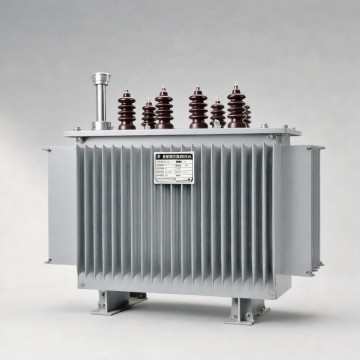
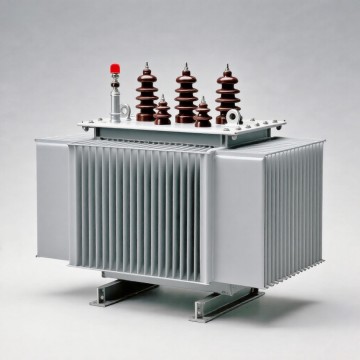
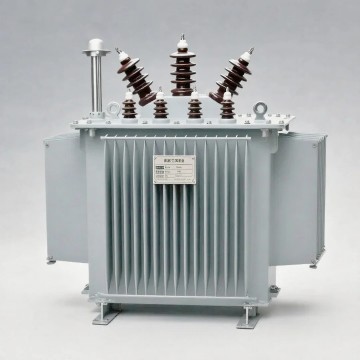
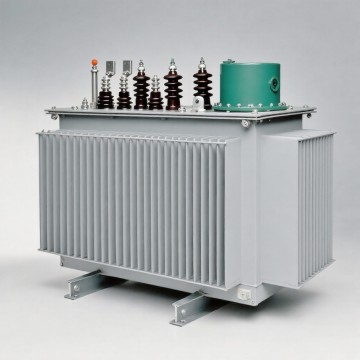
High-speed railways demand immense power. A single bullet train can draw upwards of 10 to 15 Megawatts during acceleration. Transformers in HSR substations are typically robust, oil-immersed units (such as our highly reliable S11 and S13-M series) that step down high transmission voltages (e.g., 110kV or 220kV) to the 25kV or 2x25kV required for the overhead contact lines. These transformers must feature exceptional short-circuit withstand capabilities and superior insulation systems to handle the transient overvoltages caused by lightning strikes and pantograph arcing. Furthermore, they must efficiently manage the reverse power flow generated when trains utilize regenerative braking systems, feeding power back into the grid.
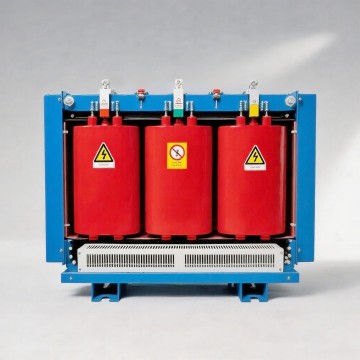
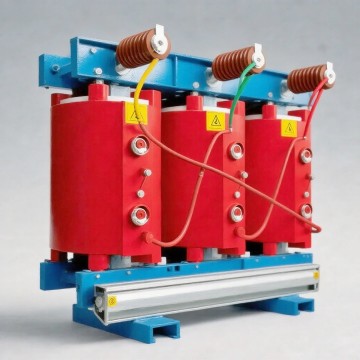
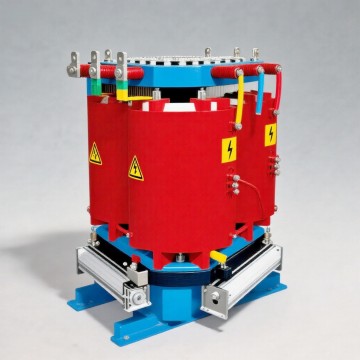
Unlike open-air HSR networks, urban metro systems often locate their substations underground or within densely populated commercial buildings. In these scenarios, strict fire safety and environmental regulations absolutely prohibit the use of traditional mineral oil. This is where Dry-Type Cast Resin Transformers (like our SC(B)10, 11, and SC(B)H15 series) become indispensable. Encapsulated in flame-retardant, self-extinguishing epoxy resin, these transformers pose zero risk of oil leaks, toxic emissions, or catastrophic fires. Their compact design is crucial for navigating the spatial constraints of subterranean vaults, while their resistance to moisture and dust ensures reliable operation in the damp, enclosed environments of subway tunnels.
Light rail systems running through city centers require traction substations that blend seamlessly into the urban landscape. Noise pollution is a critical concern. Transformers utilized here often feature specialized core clamping and dampening techniques to minimize magnetostriction-induced humming. Additionally, modern transport hubs are no longer just train stations; they are massive commercial complexes integrating retail, office spaces, and extensive Electric Vehicle (EV) charging infrastructure. The distribution networks within these hubs rely heavily on highly efficient, 3-dimensional wound core transformers (like the SCB-RL and S13-M. RL series) which offer perfectly balanced magnetic circuits, drastically reduced noise levels, and a significantly smaller footprint.
The global market for railway and transport transformers is experiencing robust growth, driven by aggressive government investments in green infrastructure, the rapid urbanization of developing nations, and the critical need to replace aging, inefficient power equipment in established networks like those in Europe and North America. Transport authorities are increasingly shifting their focus from initial Capital Expenditure (CapEx) to Total Cost of Ownership (TCO) and environmental impact.
One of the most profound technological shifts in this sector is the adoption of Amorphous Alloy Transformers (such as our S(B)H15M and SC(B)H15 lines). Traditional transformer cores use oriented silicon steel. Amorphous alloys, however, are created by rapidly cooling molten metal, resulting in a non-crystalline atomic structure. This unique structure dramatically reduces magnetic friction (hysteresis) and eddy currents. For transport systems where transformers operate 24/7, often with fluctuating loads, the no-load losses (core losses) of amorphous transformers can be 70% to 80% lower than conventional models. Across a vast railway network, this translates to massive reductions in energy consumption, operational costs, and carbon footprint.
Another breakthrough trend is the 3D triangular wound core architecture. Traditional planar 3-phase cores have inherent magnetic imbalances because the magnetic path length for the center phase differs from the outer phases. Our S13-M. RL and SCB-RL series utilize three identical core rings arranged in an equilateral triangle. This perfect three-phase symmetry ensures completely balanced magnetic circuits, virtually eliminating zero-sequence harmonic currents. For rail systems plagued by harmonic distortions from power electronics, 3D core transformers offer smoother operation, lower noise, reduced excitation current, and enhanced resistance to short-circuit forces due to their robust, seamless wound construction.
The future of transport power systems lies in digitalization. Modern 3 phase transformers are increasingly equipped with IoT sensors for continuous condition monitoring. Real-time data on winding temperatures, partial discharge, and dissolved gas analysis (DGA) in oil allows railway operators to shift from reactive maintenance to predictive maintenance. This minimizes unexpected downtime—a critical factor since a single substation failure can halt an entire transit line, causing massive economic and social disruption.
Hangbian Electric Power Technology Co., Ltd. is a high-tech enterprise integrating research and development, design, production, sales, and service. The company boasts strong technical capabilities and advanced production testing equipment, specializing in the manufacture of power transformers, pre-fabricated substations, box-type substations, high-voltage KYN28-12 indoor switchgear, high-voltage KYN28-24 indoor switchgear, high-voltage KYN6 1-40.5 indoor switchgear, DRM-12/CFV gas-insulated switchgear, GTXGN15-12 solid-insulated ring main units, XGN-12 ring main units, DFW.12 outdoor switchgear: GCS, GCK, MNS, and GGD low-voltage switchgear; XL-21, JP cabinets, PZ30, various non-standard boxes, control boxes, and other series products as a modern enterprise.
The company has been rated as an "AAA" credit enterprise by the financial system for many consecutive years, recognized as a provincial technology-based small and medium-sized enterprise, a national high-tech enterprise, and has achieved "A" grade credit status in Zhejiang Province for "Contract Compliance and Creditworthiness." It has successively passed 1SO9001 international quality system, ISO14001 environmental management system, OHSAS18001 occupational health and safety system, CCC, CQC product certifications, as well as testing reports for power transformers, low and high-voltage complete testing reports, and national high-voltage transmission and distribution type tests. The company has established a modern enterprise management system and a comprehensive quality assurance system.
Hangbian Electric Power Technology Co., Ltd. is committed to the pursuit of excellence, the implementation of 6S management, SFC-MES lean integrated manufacturing execution system, and the pursuit of "zero defects, stable lean quality". The company adheres to the concept of people-oriented and sustainable development, focuses on attracting and cultivating highly educated and high-quality technical management talents, and has established a professional R&D team, an elite sales team and a caring after-sales service team. Hangbian Power Technology Co., Ltd. has a clear positioning, aims to create a high-quality brand, emphasizes "endless innovation and endless service", and the unremitting pursuit of quality and innovation drives the company to move forward continuously, ensuring that the company is always in a leading position in the industry, while providing customers with excellent value.
Explore our full range of high-performance transformers, meticulously designed to meet the rigorous standards of modern railway electrification, urban transit networks, and multi-modal transport hubs.