
Leave Your Message
-
Whatsapp
-
Wechat

In an era defined by rapid digital transformation, cloud computing, and the proliferation of Artificial Intelligence (AI), the global economy relies heavily on the continuous, uninterrupted flow of data. At the very heart of this digital revolution lie Data Centers and Telecommunication networks. These infrastructures operate 24/7/365, demanding an immense and highly reliable supply of electricity. The unsung hero of this massive power architecture is the 3 Phase Transformer For Data Centers And Telecommunications. Serving as the vital bridge between the high-voltage utility grid and the sensitive low-voltage IT equipment, these transformers ensure that servers, switches, and cooling systems receive clean, stable, and efficient power.
The commercial and industrial landscape of data centers and telecommunications is currently undergoing a seismic shift. Historically, a standard enterprise server rack consumed between 3 to 5 kilowatts (kW) of power. However, with the advent of High-Performance Computing (HPC), Machine Learning (ML), and large language models (LLMs), rack power densities have skyrocketed. Today, it is not uncommon for modern AI-driven hyperscale data centers to deploy racks drawing 30kW to 50kW, with liquid-cooled setups pushing beyond 100kW per rack. This exponential growth in power density places an unprecedented strain on electrical distribution systems.
Similarly, the telecommunications sector is facing unprecedented power demands due to the global rollout of 5G networks and the groundwork being laid for 6G. 5G base stations require significantly more power than their 4G LTE predecessors due to massive MIMO (Multiple Input Multiple Output) technologies and denser network topologies. Telecom operators are battling grid constraints and rising operational expenditures (OPEX). Consequently, they require highly robust, low-loss 3-phase distribution transformers that can be deployed in diverse, often harsh outdoor environments without sacrificing reliability or efficiency.
Optimized for low PUE
Supports 50kW+ AI racks
Stable base station power
Tier IV Fault Tolerance
The application of a 3 Phase Transformer For Data Centers And Telecommunications is not a one-size-fits-all scenario. Different facility architectures demand specific transformer topologies, cooling methods, and core designs. Let us delve deeper into the primary application environments shaping the future of industrial power distribution.
Hyperscale facilities, operated by major cloud providers, require massive power infrastructure, often consuming tens or even hundreds of megawatts (MW) of electricity. In these environments, 3-phase transformers serve as the critical gateway, stepping down transmission-level voltages (e.g., 110kV or 35kV) to distribution levels (e.g., 10kV or 400V). Because hyperscale centers operate under Tier III or Tier IV standards, they require N+1, 2N, or 2N+1 redundancy. This means multiple 3-phase transformers must operate in parallel seamlessly. The primary challenges here are mitigating harmonic distortion caused by non-linear IT power supplies (UPS systems) and managing the immense heat generated by constant heavy loads. Specialized K-factor rated dry-type transformers or highly efficient oil-immersed transformers with advanced radiator designs are mandatory to ensure safety and longevity.
As latency-sensitive applications like autonomous driving, smart cities, and industrial IoT proliferate, data computation is moving closer to the end-user. This has given rise to Edge Computing Nodes and Prefabricated Modular Data Centers. Space is at an absolute premium in these deployments. Here, compact, dry-type 3-phase cast resin transformers (such as the SC(B)10/11 series) are highly favored. They offer a significantly reduced footprint, zero risk of oil leaks (crucial for urban or indoor environments), and excellent fire-retardant properties. Their ability to handle short-term overloads while maintaining a compact form factor makes them the ideal choice for modular containerized substations.
Telecom infrastructure is widely distributed, often situated in remote, exposed, or harsh outdoor environments. 5G base stations require a highly stable power supply to maintain signal integrity and network uptime. Transformers deployed here, such as the S13-M fully sealed oil-immersed series, must possess exceptional weather resistance, anti-corrosion properties, and the ability to withstand wide temperature fluctuations. Furthermore, telecom switching centers deal with complex loads and require precise voltage regulation. On-load capacity-changing transformers (like the S11-M-ZT) provide dynamic adaptability, adjusting to fluctuating power demands throughout the day without interrupting the power supply, thereby optimizing energy consumption during off-peak hours.
The technological evolution of the 3 Phase Transformer For Data Centers And Telecommunications is accelerating, driven by the dual mandates of digitalization and decarbonization. Several key trends are defining the next generation of power distribution equipment.
Hangbian Electric Power Technology Co., Ltd.is a high-tech enterprise integrating research and development, design, production,sales, and service, The company boasts strong technical capabilities and advanced production testing equipment,specializing in the manufacture of power transformers, pre-fabricated substations, box-type substations,high-voltage KYN28-12 indoors witchgear, high-voltage KYN28-24 indoor switchgear, high-voltage KYN6 1-40.5 indoor switchgear, DRM-12/CFV gas-insulated switchgear, GTXGN15-12 solid-insulated ring main units, XGN-12 ring main units, DFW.12 outdoor switchgear: GCS,GCK, MNS, and GGD low-voltage switchgear; XL-21,JP cabinets, PZ30, various non-standard boxes, control boxes, and other series products as amodern enterprise.
The company has been rated as an "AAA" credit enterprise by the financial system for many consecutive years, recognized as a provincial technology-based small and medium-sized enterprise, a national high-tech enterprise, and has achieved "A" grade credit status in Zhejiang Province for "Contract Compliance and Creditworthiness." It has successively passed 1SO9001 international quality system, ISO14001 environmental management system, OHSAS18001 occupational health and safety system, CCC, CQC product certifications, as well as testing reports for power transformers, low and high-voltage complete testing reports, and national high-voltage transmission and distribution type tests. The company has established a modern enterprise management system and a comprehensive quality assurance system.
Hangbian Electric Power Technology Co., Ltd. is committed to the pursuit of excellence, the implementation of 6S management, SFC-MES lean integrated manufacturing execution system, and the pursuit of "zero defects, stable lean quality". The company adheres to the concept of people-oriented and sustainable development, focuses on attracting and cultivating highly educated and high-quality technical management talents, and has established a professional R&D team, an elite sales team and a caring after-sales service team. Hangbian Power Technology Co., Ltd. has a clear positioning, aims to create a high-quality brand, emphasizes "endless innovation and endless service", and the unremitting pursuit of quality and innovation drives the company to move forward continuously, ensuring that the company is always in a leading position in the industry, while providing customers with excellent value.
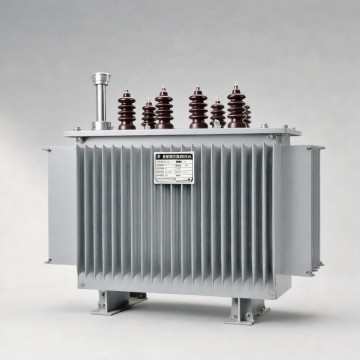 S13-M Fully Sealed Oil Immersed Transformer for Data Centers
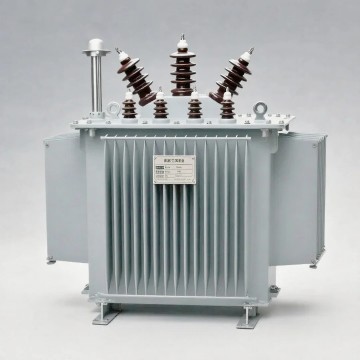 S13-M. RL/S11-M. RL Three-Dimensional Triangle Coil Core Power Transformer for Telecom
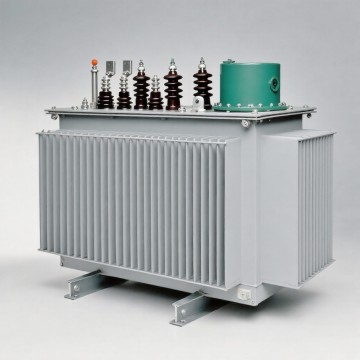 S11-M-ZT ON-Load Capacity-Changing Transformer for Base Stations
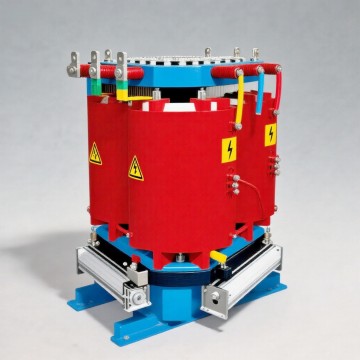 SCB-RL Triangular Three-Dimensional Wound Core Dry-Type Power Transformer for Server Rooms
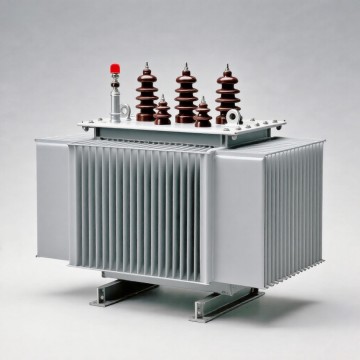 S(B)H15M Amorphous Alloy Distribution Transformer for High-Efficiency IT Loads
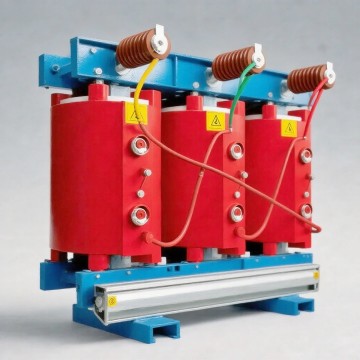 SC(B)10, 11 Dry Type Cast Transformer for Indoor Telecom Centers
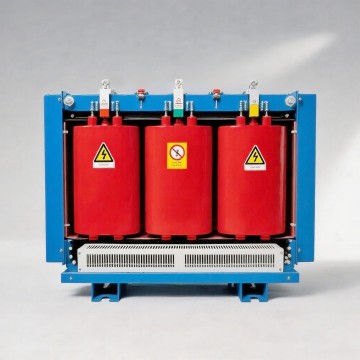 SC(B)H15 Amorphous Alloy Dry-Type Transformer for Edge Computing